Table of Contents
If you have used ChatGPT, Claude, or Gemini for anything, you have probably hit a hallucination. The AI confidently tells you a book exists that does not. It cites a court case that never happened. It quotes a person who never said the line.
This is not a bug. It is a feature of how today’s AI works. Understanding why helps you use these tools without getting burned.
What’s New
- The word is widely accepted. “Hallucination” is now the standard term for AI making stuff up. Researchers, vendors, and journalists all use it.
- Better but not solved. Newer models hallucinate less than older ones. None are at zero. Probably none will be soon.
- High-profile cases. Lawyers have been fined for citing fake cases. News outlets have published made-up quotes. The pattern keeps repeating.
Why It Matters: How a Hallucination Happens
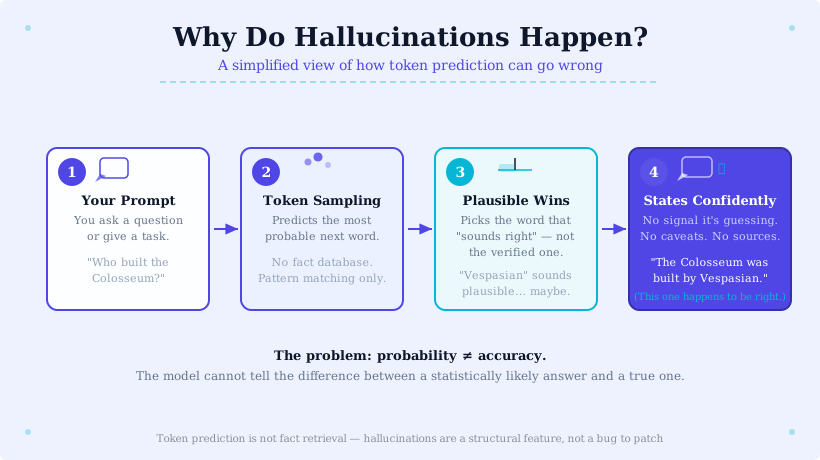
To see why hallucinations happen, you need one fact about how AI works: it is a pattern predictor, not a fact checker.
When you ask an AI “what was the title of Stephen King’s first novel?”, it does not look up an answer in a database. It runs through its trained patterns and predicts the most likely sequence of words. Most of the time, the most likely answer is also the right one. “Carrie” appears next to “Stephen King’s first novel” in millions of training examples.
But ask a niche or weird question, and the patterns get thin. The AI still has to predict something. So it predicts something that sounds right. That is the hallucination.
A useful mental model: imagine a friend who has read every book in the library but cannot leave the library to check anything. If you ask about a famous topic, they nail it. If you ask about a small detail in an obscure book, they might fill in the gap with a plausible guess. They are not lying. They are guessing in good faith. AI does the same thing, and it does it confidently.
How It Compares
Hallucination is one of several kinds of wrong AI answers. They sound similar but have different fixes.
- Hallucination. The AI invented a fact. Fix: provide sources or use a tool that retrieves real documents.
- Stale knowledge. The AI’s training data ended at some date. It does not know what happened after. Fix: enable web search or feed it the latest info.
- Reasoning error. The AI did the right kind of task but slipped on a step (math, logic). Fix: ask it to think step by step or use a tool like a calculator.
- Bias or unsafe answer. The AI reflected something problematic from its training data. Fix: vendors work on this; you can also rephrase or push back.
Knowing which mistake type you are seeing tells you which fix to use.
Who Should Care
- Anyone using AI for research. If accuracy matters, verify before publishing or acting.
- Lawyers, doctors, financial advisors. Real-world consequences make hallucinations expensive. Always cite from primary sources, not the AI’s text.
- Teachers and students. AI can be a great tutor, but treat its claims as starting points to check, not as final answers.
- Journalists and writers. Quotes, dates, and titles are exactly the kind of facts AI fakes most cleanly.
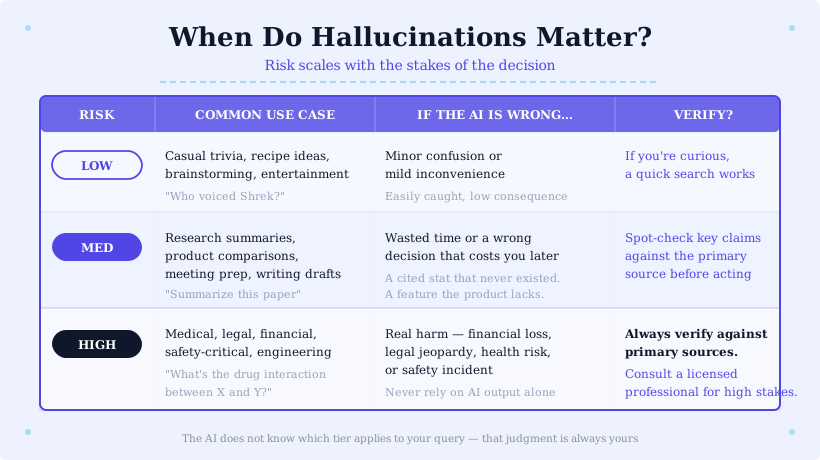
How to Spot a Hallucination
Three habits keep you safe.
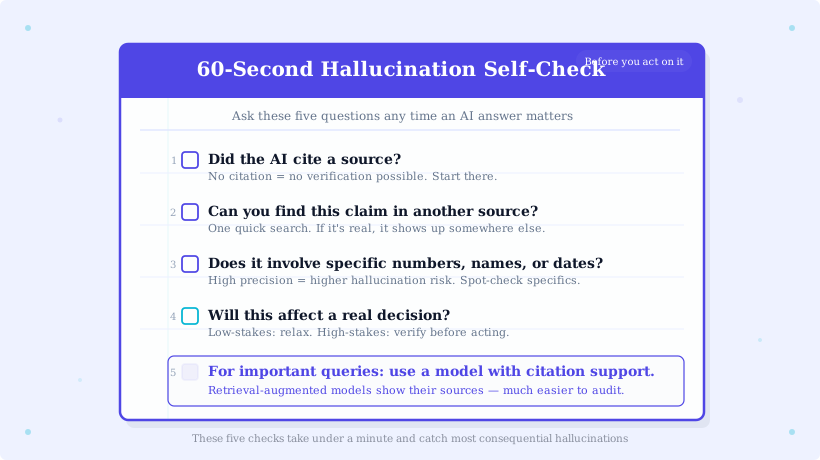
- Ask for sources. If the AI cannot point to a specific paper, page, or URL, treat the claim as unverified. Bonus: many sources the AI gives are themselves fake. Click them.
- Cross-check the suspicious bit. Search the exact quote or fact in Google. If nothing comes up, it probably did not exist before the AI said it.
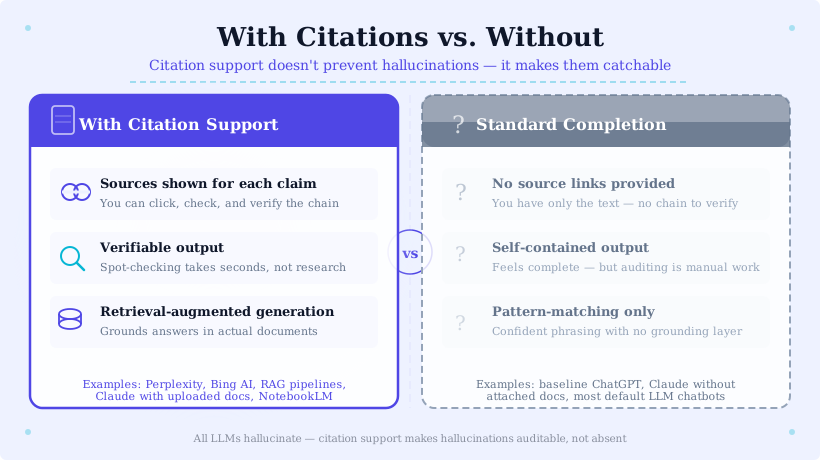
- Use retrieval-based tools for high-stakes work. Tools that ground answers in your actual documents (RAG, MCP servers, search-enabled chat) hallucinate much less than plain chatbots.
The Honest Bottom Line
Hallucinations are why we keep saying “trust but verify.” They are not a reason to avoid AI. They are a reason to use AI as a fast first draft and a smart brainstorming partner, not as an oracle.
If you want to dig into why AI behaves this way, our guide on how AI actually works is the right next read. For tools that reduce hallucinations by connecting to real data, check our MCP roundup on /mcps/.
Lindy is one of the easier ways to try an AI agent that pulls from your real data, which cuts down on the kind of confident guessing that produces hallucinations.
Internal Link: [[how-does-ai-actually-work-eli5]] Internal Link: [[what-is-an-llm-eli5]]