Table of Contents
Beehiiv AI Crawl Control: Allow, Block, or Charge AI Bots for Your Newsletter (June 2026)
The verdict before you scroll: for almost every Beehiiv operator reading this in mid-2026, the right move is to leave AI crawlers allowed and use the new dashboard to watch them, not to slam the gate shut. The exception is narrow and specific. If you sell access to a paywalled back-catalog that an AI answer could substitute for, blocking the training scrapers is the call, and that capability is gated to the Max plan. On June 23, 2026, Beehiiv embedded Cloudflare's AI Crawl Control into its dashboard, per Search Engine Land, turning a robots.txt-and-firewall chore into a toggle. The feature is real. The instinct to block everything with it is usually wrong, and below is the per-operator math on why.
This is a single decision, not a technical build. If you arrived here from our Beehiiv review or the Scale plan breakdown, this is the column those pieces don't cover: what to actually do about the AI bots crawling your archive.
What AI Crawl Control actually does
The integration bakes Cloudflare's Crawl Control into the Beehiiv dashboard, per SiliconAngle. Two things ship. First, a visibility dashboard that names the AI crawlers hitting your archive, shows which ones were blocked, and tracks how much referral traffic each one sends back. Second, one-click permissions to allow or block individual AI models, with Cloudflare updating the list as new crawlers appear so you never touch a robots.txt file or a firewall rule again.
The plan gating matters, and it splits cleanly. All Beehiiv users get the visibility dashboard in beta. Only Beehiiv Max customers can actually block crawlers, per Search Engine Land. So the question "should I block AI bots" is, for anyone below Max, really two questions: do I want to see what's crawling me (yes, it's free), and is blocking worth a plan upgrade (almost never, and the rest of this piece is why).
Current pricing, pulled from Beehiiv's pricing page on June 29, 2026: Launch is $0 a month for up to 2,500 subscribers, Scale is $43 a month, Max is $96 a month, and Enterprise is custom. Max is the only self-serve tier with the blocking toggle. That is a roughly $1,150-a-year decision if blocking is the sole reason you'd jump, which is the candid con buried under the launch coverage: the feature everyone is writing about is locked behind the most expensive plan most operators have no other reason to buy.
The two camps, and what each one costs you
Beehiiv frames this as two clear choices, per the Cloudflare announcement quoted in Search Engine Land: opt into maximum discovery and let AI search engines and agents crawl your work freely, or choose content protection and block the scrapers to preserve your archive for future monetization and licensing.
Allowing is the growth bet. When ChatGPT, Perplexity, or Google's AI Mode answers a question your newsletter covers well, an open archive is what gets you cited, and the citation is a link back. The new dashboard quantifies exactly that: it shows referral traffic each crawler sends, per SiliconAngle. For a newsletter still building an audience, being the source an AI cites is free distribution into the exact discovery surfaces where readers now start.
Blocking is the protection bet, and it has a real cost. Shut the crawlers out and you vanish from AI answers about your topic. Your competitor who left the gate open gets cited in your place. You trade discoverable reach today for the hope of a licensing deal later, and that hope is thinner than the launch framing suggests. Cloudflare runs a Pay Per Crawl marketplace where publishers can charge AI firms for access, per SiliconAngle, but that market rewards archives an AI lab actually wants to pay for. A 4,000-subscriber niche newsletter is not that archive yet.
There is a sober note worth holding onto. The open question, per Search Engine Land, is whether publishers will use these controls at all once they have them. A toggle being easy does not make blocking the right reflex.
The pick, per operator type
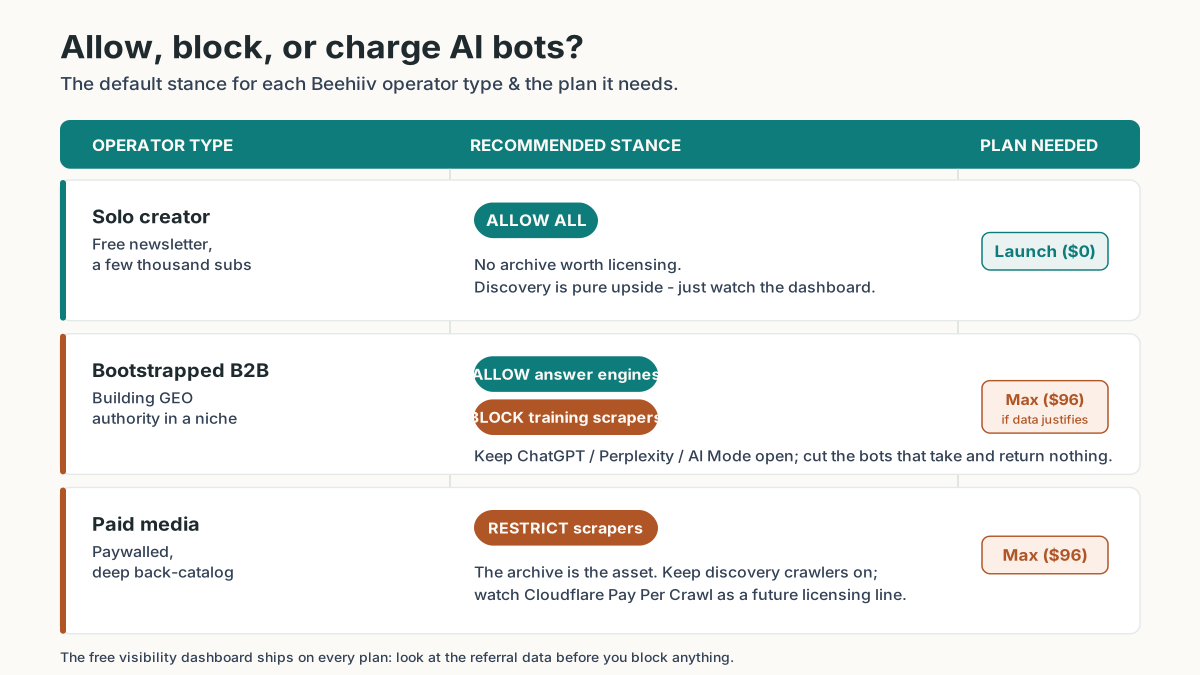
Solo creator, free newsletter: allow, and just watch the dashboard
If you run a free newsletter under a few thousand subscribers, allow everything. You have no archive worth licensing to protect. No AI lab is negotiating a deal for a 1,200-subscriber archive, and every crawler you block is a citation you hand to someone else. Turn on the visibility dashboard (it's free on every plan) so you can see which AI services reference your work and how much traffic they return. Treat that as a new analytics tab, not a control panel. There is no upgrade decision here at all. Stay on Launch.
Bootstrapped B2B newsletter building GEO authority: allow the answer engines, block the pure training scrapers
This is the nuanced case, and it's where the toggle earns its keep. If you're growing a B2B newsletter and your whole growth strategy is getting cited as the authority in your niche, you want the answer-engine crawlers (the ones feeding ChatGPT, Perplexity, and Google AI Mode) wide open, because those send referral traffic you can see in the dashboard. The crawlers worth blocking are the bulk training scrapers that ingest your archive and return nothing. Blocking individual models is a Max-only capability, per Search Engine Land, so this selective stance is the one genuine reason a serious B2B operator might value the $96-a-month tier (per Beehiiv's pricing page, June 29, 2026). Before upgrading for it alone, run a month on the free dashboard first and confirm a training scraper is actually taking volume without sending traffic back. If the data says otherwise, leave it allowed and save the money.
Paid media operator with a deep back-catalog: restrict the scrapers, and watch Pay Per Crawl
If you run a paid media business with a substantial archive that subscribers pay to read, blocking the training scrapers is defensible. Your content has licensing value precisely because it's deep and gated, and letting it be ingested for free undercuts the asset. This is the operator the Max plan and Pay Per Crawl were built for. You're likely on Max or Enterprise already, so the blocking toggle costs you nothing extra. Keep the answer-engine crawlers open for the discovery they drive to your free tier, block the scrapers that monetize your work without paying, and keep an eye on whether Pay Per Crawl matures into a real revenue line. Even here, blocking the discovery crawlers wholesale is a mistake. You still want the top-of-funnel citations.
How to set it up
Setup runs through your Beehiiv dashboard, not Cloudflare's. The controls roll out through Beehiiv's standard dashboard settings, per Search Engine Land. The flow is short:
- Open your Beehiiv dashboard settings and find the AI Crawl Control panel (rolling out now to all accounts in beta).
- Read the visibility view first. It names the AI crawlers hitting your archive and shows the referral traffic each one returns, per SiliconAngle. Sit with that data for a few weeks before changing anything.
- If you're on Max and the data justifies it, use the one-click toggles to block specific models. Cloudflare keeps the crawler list current automatically, so you're not maintaining anything by hand.
The honest sequence is: look, wait, then maybe act. The dashboard is the product worth using on day one. The blocking toggle is the part most operators should leave alone until the referral data tells them a specific crawler is taking without giving.
Cloudflare Pay Per Crawl: a future option, not a reason to upgrade today
Pay Per Crawl is the marketplace where publishers charge AI firms for content access, per SiliconAngle. Cloudflare also acquired Human Native, an AI content-licensing marketplace, in January 2026, per SiliconAngle, which signals where this is heading. The direction is real: a paid lane for content access that doesn't depend on a one-off licensing negotiation.
The near-term reality is plainer. The buyers in that marketplace are paying for archives at a scale and quality that move a model's training, and most Beehiiv newsletters aren't there. For a solo or mid-size operator, Pay Per Crawl is a thing to track, not a thing to build around. Don't upgrade to Max chasing crawl revenue that won't materialize this year. If you're already on Max for other reasons and you have an archive worth charging for, listing it costs you little and the optionality is fine to hold. That's the whole case.
The default stance
For almost everyone: allow the crawlers, turn on the free visibility dashboard, and decide based on the referral data rather than the instinct to lock the doors. Block only when you can point to a specific scraper taking your work without returning traffic, and only the paid media operator with a real licensing asset should reach for Max purely to do it. If you're picking a platform around this kind of AI-era control and the rest of Beehiiv's stack, Beehiiv is where the toggle lives, and our Beehiiv vs Kit vs Substack comparison covers how the platforms stack up for AI-native creators.