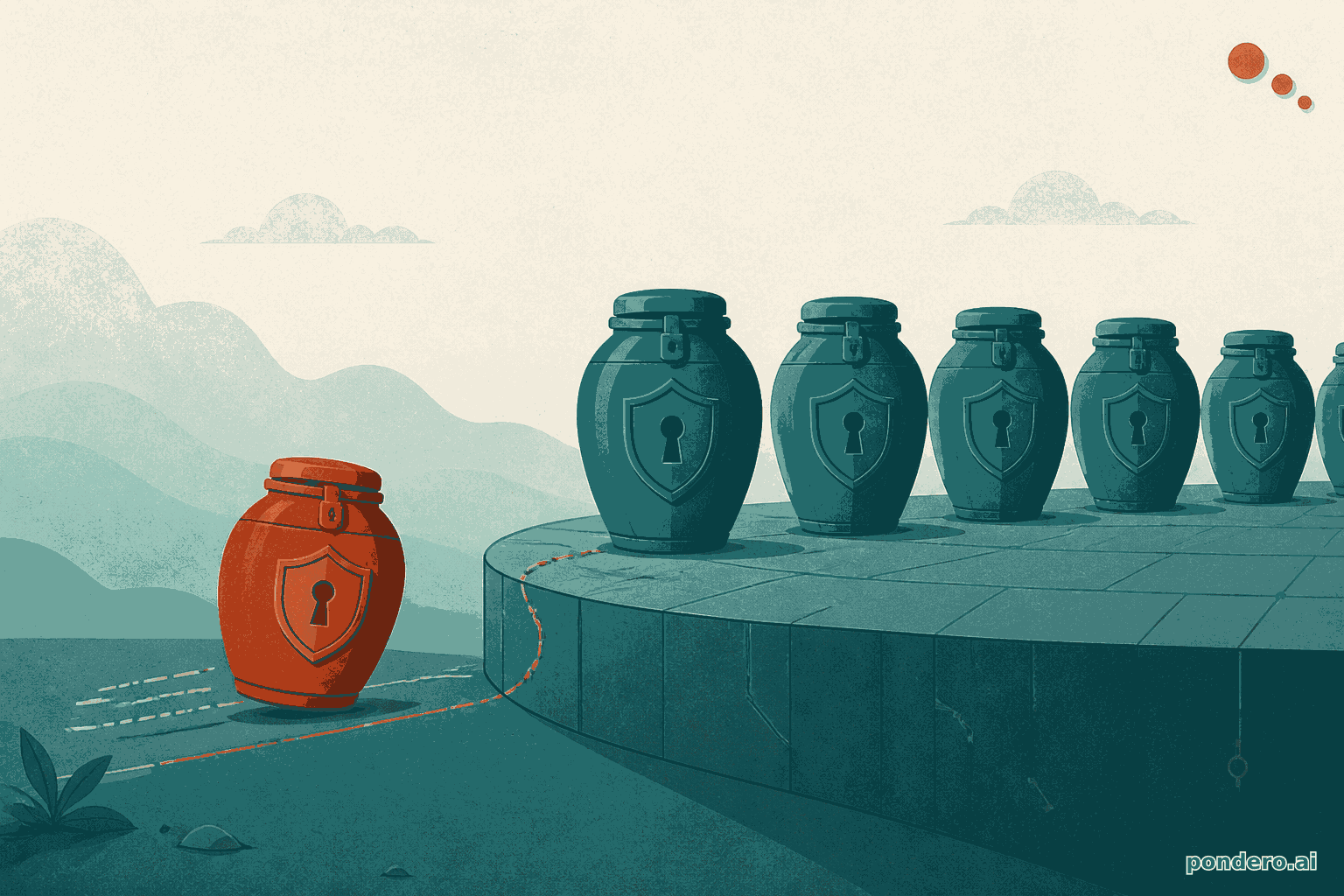
Anthropic ships self-hosted sandboxes and MCP tunnels at Code with Claude London
Anthropic launched two new infrastructure features for Claude-based agent deployments at the Code with Claude Extended London event on May 20, 2026: self-hosted sandboxes, now in public beta, and MCP tunnels, now in research preview.
What
Self-hosted sandboxes let teams run tool execution on their own infrastructure while the agent orchestration loop remains on Anthropic's side. Per the testingcatalog.com report, the feature supports stateful, long-running sandboxes with zero-trust secrets management. It also offers flexible resource sizing and custom runtime images, both suited to compute-intensive tasks such as image generation or large build jobs. Access runs through self-hosted infrastructure and managed providers, including Cloudflare, Daytona, Modal, and Vercel, per the same report.
MCP tunnels handle a different job: they let Claude agents reach MCP servers that sit inside private networks. The tunnel operates over a secure, outbound-only connection from the private network to Anthropic's infrastructure. That removes the requirement for teams to open inbound firewall ports or expose internal endpoints to the public internet. Per the testingcatalog.com report, organizations must request access because MCP tunnels remain in research preview as of May 20, 2026. No general availability date or pricing has been announced.
This was the second stop on Anthropic's 2026 Code with Claude developer tour, following the San Francisco stop on May 6, 2026, per the event page. The tour format combines founder and builder stage sessions with hands-on workshops. The London edition ran on May 20, 2026, per the same page.
Why it matters
Both features address one constraint that has kept enterprise teams from adopting Claude-based agents for sensitive workloads: the requirement to route all tool execution through Anthropic's infrastructure. Self-hosted sandboxes shift compute back to the customer's own environment while the agent orchestration layer stays in the cloud. That split matters for regulated industries where data residency rules or internal policy prohibit sending intermediate computation results outside controlled environments. Think financial services, healthcare, and government.
MCP tunnels solve a related but distinct problem. Private-network MCP servers already exist; teams have built internal tooling around the Model Context Protocol to give agents access to databases, APIs, and internal knowledge systems. Until now, connecting a Claude agent to those servers required either exposing the MCP server to the internet or running the entire agent loop on-premises. The outbound-only tunnel model removes both requirements.
Naming managed providers for sandboxes (Cloudflare, Daytona, Modal, and Vercel) gives teams without fully self-managed infrastructure a path to production without standing up their own compute layer. Each provider sets its own pricing and operational model. Anthropic has not disclosed what, if any, additional cost accrues when sandbox compute routes through a managed provider versus a self-hosted environment, so teams evaluating the feature will need to consult each provider's pricing directly.
The breadth of that provider list signals something else: Anthropic is treating sandboxes as an open ecosystem feature rather than a tightly vertically integrated one, at least at the public beta stage. Whether that posture holds through general availability is the outstanding question.
Context and reactions
These London announcements extend the Managed Agents infrastructure category that Anthropic introduced at the San Francisco stop on May 6, 2026. At San Francisco, per the InfoQ report, Anthropic introduced Managed Agents with primitives for sandboxed code execution, checkpointing, and credential scoping. Self-hosted sandboxes and private MCP tunnels now fill in the deployment options that were absent from that initial release: the paths for teams that cannot or will not use Anthropic-hosted compute for their tooling layer.
MCP has seen broad uptake since its initial release. Integrations now appear across coding assistants, enterprise AI platforms, and a range of third-party developer tools. That growth has surfaced a consistent complaint from enterprise adopters. Most MCP deployments assume the MCP server is reachable over the public internet, and that does not match the reality of corporate network architectures, which separate internal tools behind firewalls. The outbound-only tunnel model addresses the gap directly, though research preview status means it is not yet production-ready for most organizations.
So far Anthropic has not disclosed the number of organizations that have enrolled in the MCP tunnels research preview, nor the number that have activated self-hosted sandboxes since the public beta opened on May 20.
What to watch next
No general availability date or pricing structure for MCP tunnels has been announced. Watch the Anthropic news feed for the transition from research preview to general availability, which would clarify pricing and expand access beyond the current request-based enrollment. Self-hosted sandboxes carry their own caveat: public beta status means breaking API changes remain possible. Teams building on the feature should track Anthropic's release notes before committing to a production integration.
Sources
- Code with Claude: Extended London - May 20, 2026 -- primary event page
- Anthropic launches secure sandboxes and private MCPs -- secondary, feature details
- Anthropic's Code with Claude Announces Managed Agents, Proactive Workflows, Capability Curve -- secondary, event context