Meta CTO Admits Applied AI Reorg Was Atrocious as 6,500 Engineers Revolt
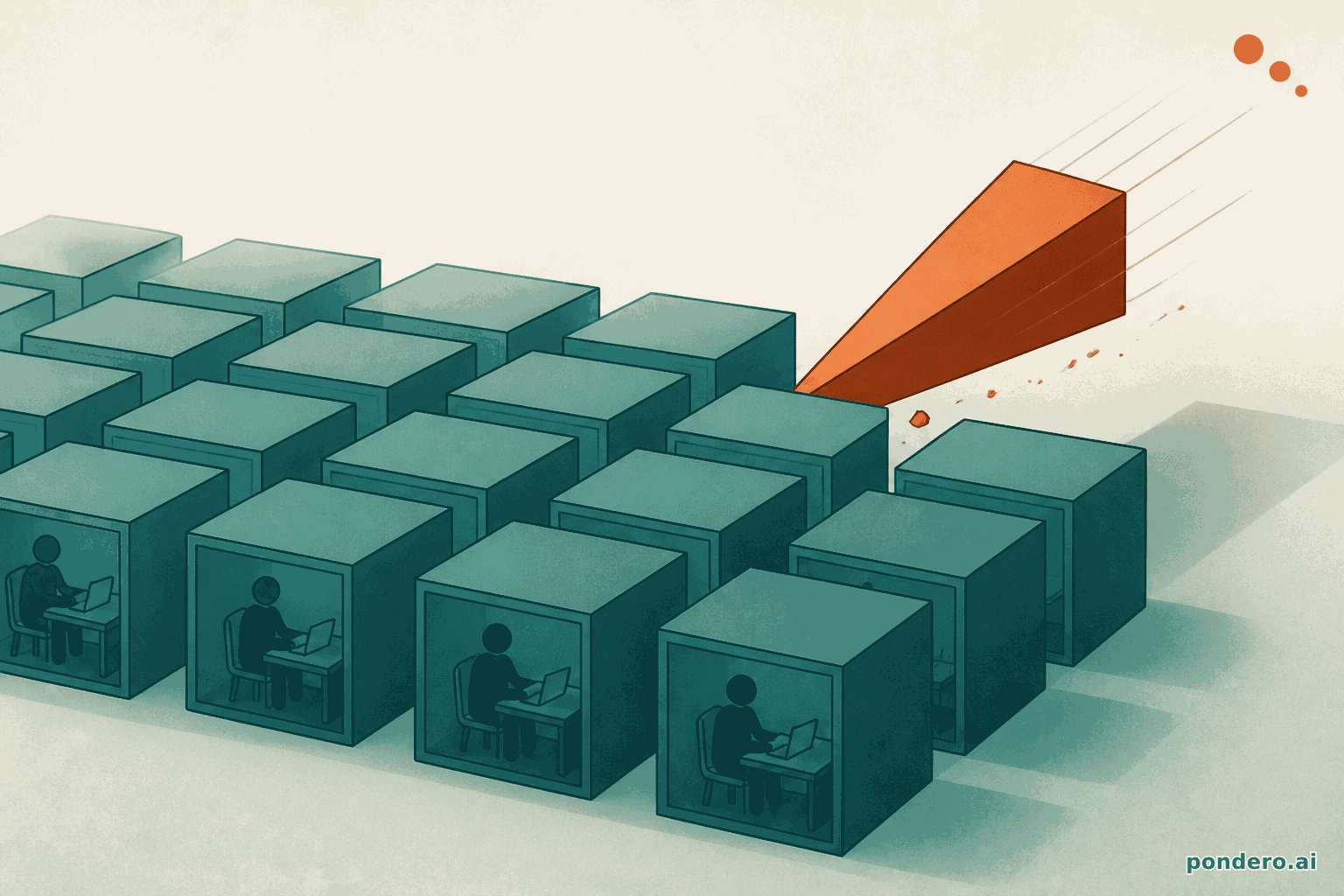
Meta's chief technology officer, Andrew Bosworth, told employees in an internal memo that the company did an "atrocious job" handling its recent AI reorganization, a rare admission from a senior executive that came as roughly 6,500 engineers compared their new unit to a prison camp.
What
Meta assembled its Applied AI Engineering unit in March 2026 by reassigning engineers and product managers from teams across Facebook, Instagram, and WhatsApp. The transfers were not optional, per TechCrunch: employees received a surprise email and were told to join or leave the company. Those who stayed found themselves writing coding puzzles and challenge problems to train Meta's AI models, a form of expert data annotation work.
Bosworth, in his internal memo reported by Wired and confirmed by multiple outlets, wrote that Meta "did an atrocious job explaining the vision" to the affected engineers, per the reporting. On the same day, CEO Mark Zuckerberg issued a separate memo acknowledging the company had "made mistakes" and promising no further company-wide layoffs for the rest of 2026. He also raised budgets for team events and said the manager-to-report ratio, which had reached as high as 50-to-one inside Applied AI, would be capped.
The unit is led by Maher Saba, a 12-year Meta veteran who previously ran Reality Labs, and reports to Bosworth. Alexandr Wang, the founder of Scale AI, sits above the unit as Meta's chief AI officer heading Meta Superintelligence Labs. Meta acquired a 49% stake in Scale AI for $14.3 billion in 2025 and brought Wang in-house to close the gap on training data quality.
Every frontier lab faces the same synthetic data ceiling
The Applied AI revolt points to a structural problem that extends past Meta. Synthetic AI training data, which fueled rapid model improvements from 2022 through 2025, loses effectiveness when models approach human-level performance on specific tasks. At that threshold, models cannot generate training examples that challenge themselves. Meta's solution was to use its own engineers as the human intelligence layer. The engineers' resistance reveals both the morale cost of that approach and the fact that every frontier AI lab faces the same ceiling.
Meta posted $56.3 billion in first-quarter 2026 revenue, up 33% year-over-year, per TechTimes. The talent crisis is playing out against a backdrop of record profits, which makes the internal goodwill measures harder to assess. More than 1,600 employees also signed a petition against a keystroke-tracking program Meta ran for agent training data. The company later let employees pause collection for up to 30 minutes at a time.
Chief product officer Chris Cox separately described the period as running "a marathon in the middle of a hailstorm" in an employee call and said AI "is neither god, nor is it the devil," a rare check on internal expectations from a company that has staked its 2026 capital expenditure, raised to between $125 billion and $145 billion, almost entirely on AI infrastructure.
What to watch next
Zuckerberg committed to no further company-wide layoffs through year-end 2026 and floated a company-wide hackathon for July, though the proposal drew open skepticism from employees. The more durable question is whether Applied AI engineers can transfer back to product roles, as Zuckerberg's memo suggested would be possible, or whether the unit's data-annotation mandate stays locked in place. Meta has not announced any structural changes to the unit's core work.
Sources
- Meta's months-old AI unit is a soul-crushing gulag, say the engineers stuck inside it (TechCrunch, June 12, 2026)
- Inside the revolt at Meta's Applied AI unit (The Next Web, June 18, 2026)
- Meta Conscripts 6,500 Engineers as Data Labelers (TechTimes, June 17, 2026)