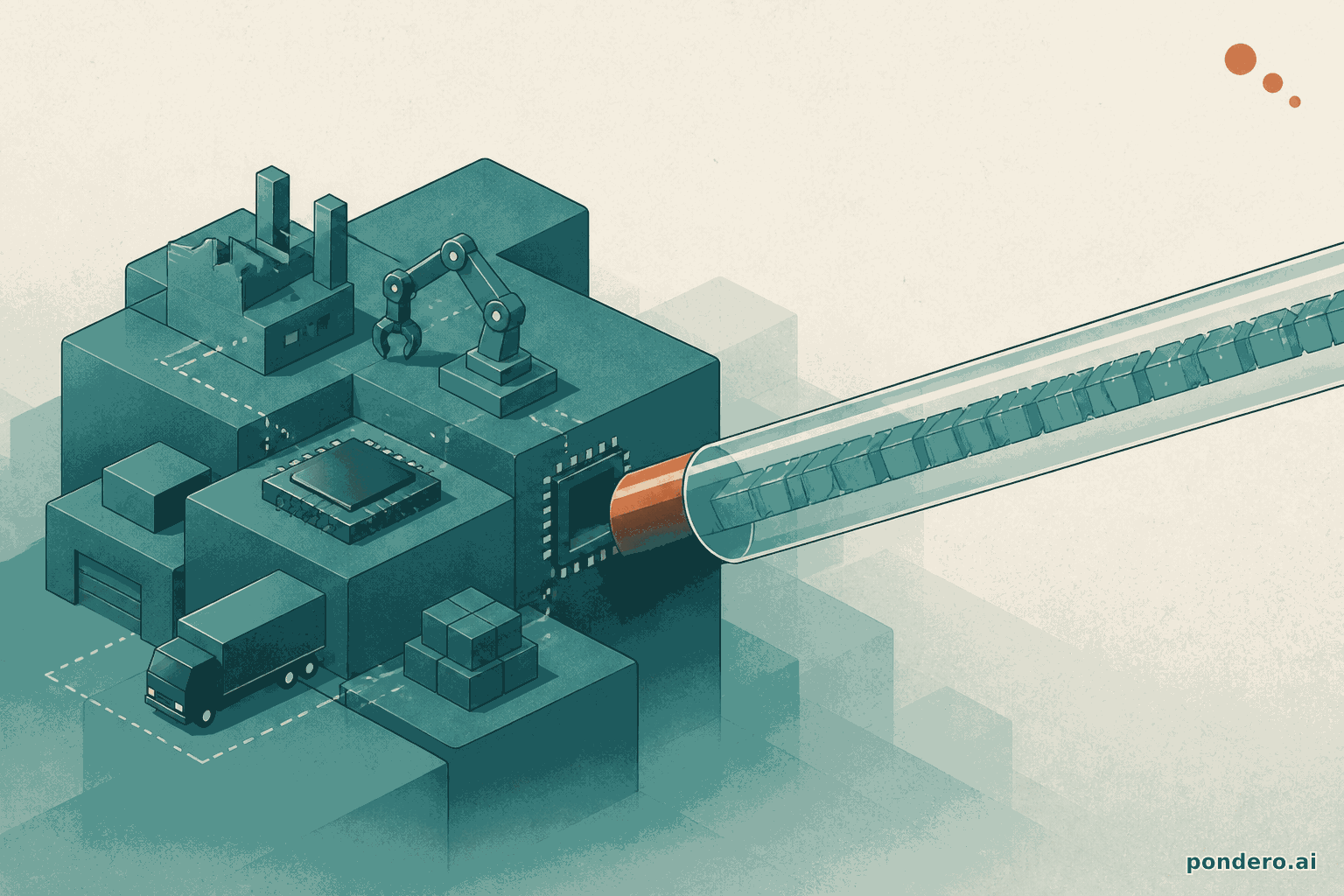
Pax Silica alliance grows to 24 members as US launches AI supply chain pilot in Panama
Ten countries joined Pax Silica at its Second Summit June 25 and 26, pushing membership from 14 to 24 and planting the US-led semiconductor coalition inside Europe, Latin America, and Central Asia for the first time. The headline operational move: a live AI credentialing pilot in Panama, designed to fast-track verified chip and critical-mineral shipments along trusted trade routes.
What happened
Under Secretary for Economic Growth Jacob Helberg hosted the two-day meeting in Washington. New entrants included Germany, the Netherlands, the European Union, Argentina, Chile, Costa Rica, El Salvador, Greece, Kazakhstan, and Panama, per the State Department's outcomes release. That list is notable for what it covers geographically: a European anchor in Germany plus the EU as an institution, five Latin American nations, one Central Asian economy.
Delegates adopted a Joint Statement on AI Opportunity focused on pro-growth AI regulation and supply chain security. Signatories from the broader Pax Silica roster include Argentina, Australia, Germany, India, Japan, South Korea, the United Kingdom, and the United States, among others, per the State Department. On the bilateral side, the US and Taiwan signed a separate statement on economic security cooperation at the same event.
The Panama pilot is the most concrete deliverable announced. The State Department said AI will be used to credential and verify shipments of semiconductors, AI infrastructure hardware, and critical minerals through Panama's logistics corridor, with the goal of accelerating trusted trade routes and reducing supply chain vulnerability. No timeline or vendor name was disclosed.
Foundry School, a workforce initiative developed with Stanford University, was also announced. Helberg unveiled the program at the summit: it will run a seminar series for advanced manufacturing founders and CEOs, alongside a new curriculum developed jointly by Stanford and the State Department for rollout across Pax Silica member economies, per ANI coverage of the summit.
Germany and the EU add industrial weight to Pax Silica
Pax Silica started as an East Asia-focused initiative. Germany and the EU now inside it changes the coalition's industrial weight considerably. European semiconductor fabs, logistics capacity, and regulatory coordination are now theoretically available to the alliance's supply chain goals, though no specific commitments on fabs or procurement were announced at this summit.
The Panama pilot is the sharpest thing to watch near-term. If AI-driven credentialing demonstrably speeds verified chip movements through one major transit corridor, the State Department has a model to replicate. Other Pax Silica members in Latin America and Southeast Asia sit along strategically relevant logistics routes where the same framework could apply.
Foundry School's curriculum angle matters for a different reason. A State Department-backed training program for semiconductor-sector founders across 24 countries treats talent pipeline development as supply chain infrastructure, not a soft add-on. That is a shift from the earlier framework of export controls and tariff barriers as the primary hardening tools.
Context
Pax Silica was established earlier in 2026 to coordinate semiconductor and AI infrastructure supply chain security among US-aligned partners. Its first 14 members were concentrated in Asia and existing close US partners. Kazakhstan's addition stands apart: it sits adjacent to major Chinese logistics infrastructure, and its inclusion signals that Pax Silica is trying to build coordination at supply chain pinch points, not just among existing allies.
What to watch next
Watch the Panama pilot for disclosed results: does the State Department publish throughput data or expand the program to other Pax Silica transit members? That will be the test of whether the credentialing model is exportable. China's counter-moves are the second variable. A 24-country alignment anchored by Germany and the EU is a material shift in the geopolitics of chip access, and counter-alliance announcements or challenges to the credentialing framework are plausible responses.
Sources
- Outcomes of the Second Pax Silica Summit - US State Department primary release
- US State Department to pilot AI supply chain platform in Panama under Pax Silica pact as 10 new partners join - ANI secondary coverage