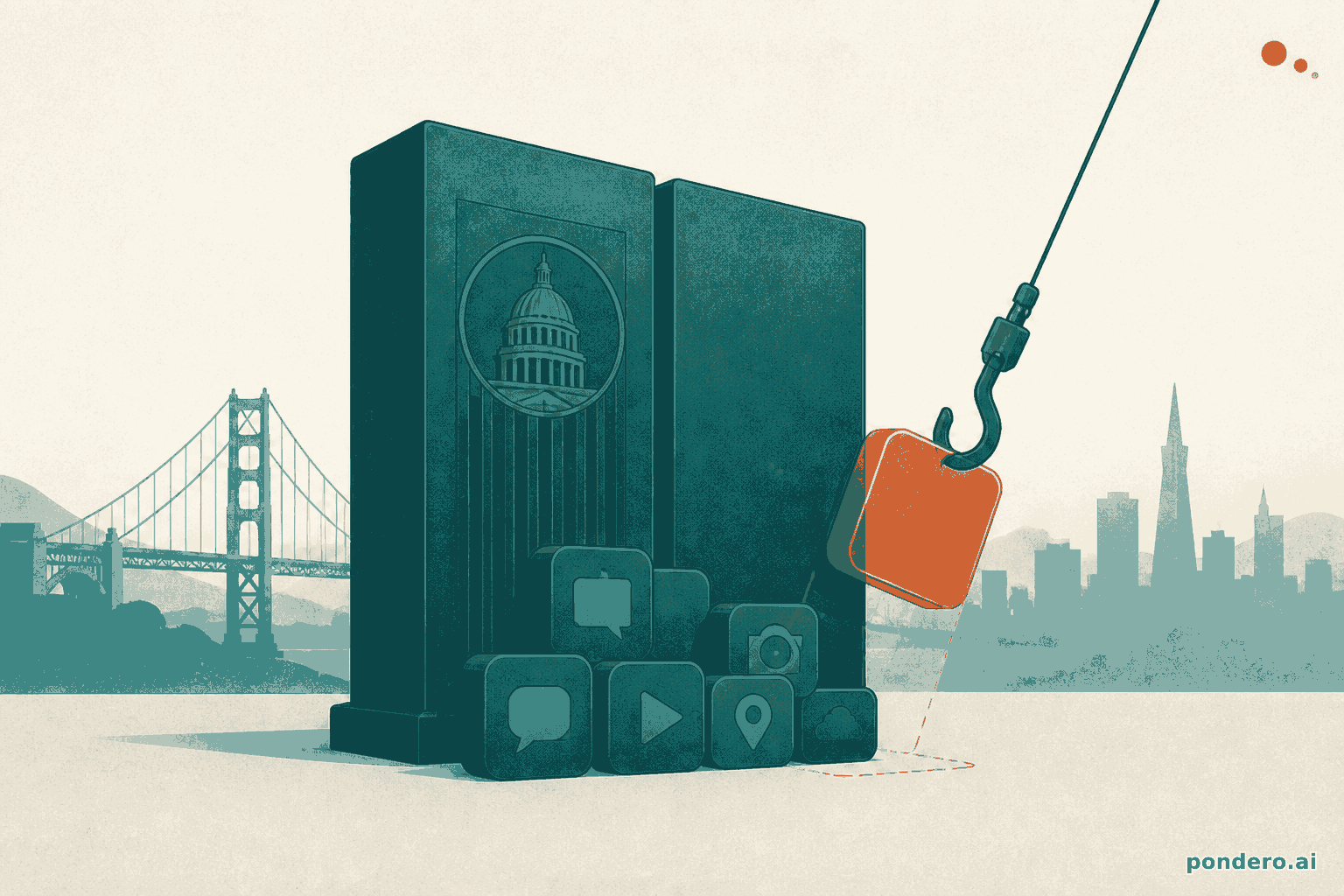
San Francisco orders Apple and Google to remove 13 AI nudify apps from their stores
San Francisco City Attorney David Chiu sent cease-and-desist letters to Apple and Google on July 17, demanding removal of 13 AI applications from the App Store and Google Play that strip clothing from photos of real people using image-generation AI. Apple pulled three apps the same day and began terminating developer accounts. Google suspended all five apps named on its platform.
What
Chiu's office targeted 8 apps on the App Store and 5 on Google Play. The apps market themselves as face-swapping or photo-editing tools but function as nudify services, generating nonconsensual synthetic nude images from clothed photographs. The letters invoke California law that criminalizes activities that "knowingly facilitate" or "recklessly aid or abet" the creation of nonconsensual deepfake pornography, alongside a 2025 California law allowing civil actions against third-party facilitators of such material, per TechCrunch's review of the letters. Both companies have 28 days to respond before civil penalties could follow.
The letters state that both companies had been on notice for nearly a year. The Tech Transparency Project sent reports in January and again in April 2026 warning of "dozens of apps" in their stores selling deepfake NCII services, processed through the platforms' own payment systems. Per Chiu, speaking to Wired, the companies have likely made "millions of dollars in fees" from those apps.
"Apple and Google are profiting off apps that exploit women and girls by generating nonconsensual intimate deepfakes," Chiu said in a statement. "While the companies cut ties with some problematic apps, Apple and Google have a responsibility to be proactive and vigilant to prevent sexual abuse."
App stores can now be held liable for nudify apps
The action holds platform operators liable, not just the app developers who built the tools. Earlier US efforts targeting AI-generated nonconsensual imagery went after the apps' makers. Chiu's letters argue that Apple and Google, by processing payments and distributing the apps after multiple public warnings, became facilitators under California law. That is a meaningful legal shift: city enforcement reaching back through the distribution chain to the platform level.
Both companies' quick partial responses suggest the theory carries practical weight. Apple removed three of the eight App Store apps and said it was terminating the developers' accounts; Google suspended all five Play Store apps named in the letter. Five App Store apps remain in place as of July 17, per Engadget's coverage. The 28-day window will determine whether those come down voluntarily or Chiu escalates to litigation.
For builders and operators of AI image-generation tools, the enforcement theory creates a clear risk signal. Platforms that earn payment-processing fees from synthetic-imagery apps now face city-level enforcement exposure under California's deepfake statutes, regardless of whether they built the harmful feature themselves. Any AI tool generating synthetic images of real people sits downstream of this legal theory.
What to watch next
Whether Apple removes the remaining five App Store apps before the 28-day deadline expires. If Chiu's office files suit, it would be the first major US municipal litigation holding a platform distributor liable under AI deepfake law and could prompt other state attorneys general to apply the same theory using analogous statutes already on the books in California and elsewhere.
Sources
- Apple and Google ordered to purge 'nudify' apps from App Stores - TechCrunch, July 17, 2026
- San Francisco demands Apple and Google delete AI nudify apps from app stores - Wired, July 17, 2026
- Apple and Google ordered by San Francisco attorney to take action against 'nudify' apps - Engadget, July 17-18, 2026