Markets Sold Nvidia on Kimi K3. Bloomberg Says the Architecture Points to Higher HBM Demand.
Nvidia fell 2.2% and AMD fell 1% on July 20, per CNBC, as chip stocks sold off on the assumption that Kimi K3 would reduce AI infrastructure demand the way DeepSeek did in January 2025. Bloomberg published a counter-read the same day: the model's 2.8-trillion-parameter sparse mixture-of-experts (MoE) architecture is memory-bandwidth-intensive, making it a demand driver for high-bandwidth memory (HBM) rather than a substitute for GPU compute.
What happened
Moonshot AI released Kimi K3 on July 16, per MLQ.ai. The model is a sparse MoE system with 2.8 trillion total parameters and a 1-million-token context window, making it the largest open-weight AI model released to date per Moonshot's own description. Two variants shipped at launch: K3 Max, aimed at chat and agent tasks, and K3 Swarm Max, designed for parallel workloads. Full open weights are due by July 27.
On independent leaderboards, Artificial Analysis placed Kimi K3 at an Elo rating of 1,547, behind only Anthropic's Claude Fable 5 and ahead of OpenAI's GPT-5.5 per MLQ.ai. The model leads Arena.ai's frontend code benchmark. API pricing is $3 per million input tokens and $15 per million output tokens.
Markets read the release as a demand-reduction signal. The logic mirrored January 2025: a Chinese AI lab releases a capable open-weight model, investors assume less compute will be needed to run frontier AI, and chip stocks sell off. On July 19-20, that reaction extended to SK Hynix and Samsung shares as well, per the Seoul Economic Daily.
The architecture argument Bloomberg is making
Bloomberg's July 20 analysis argues the market conflated two different kinds of AI efficiency. The piece stated: "While models such as Kimi K3 are designed to use computing resources more efficiently, they still require enormous amounts of memory to operate, a dynamic that could continue to support demand for companies including SK Hynix Inc., Taiwan Semiconductor Manufacturing Co. and Nvidia Corp."
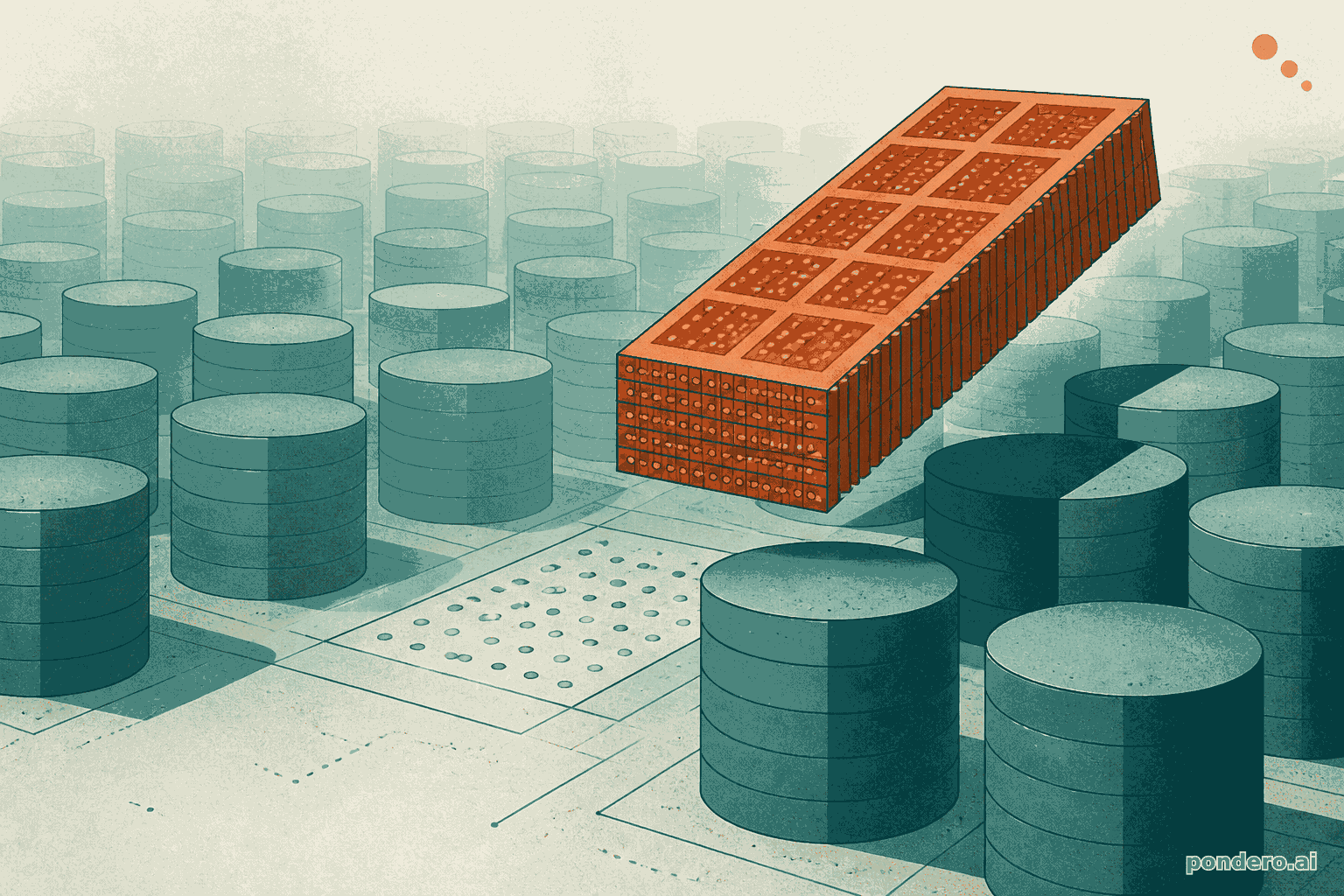
Sparse MoE models reduce floating-point arithmetic per token by routing each request through a subset of expert layers rather than activating the full model. Kimi K3 activates 16 of 896 experts per token, roughly 1.8% of its total pool. That keeps per-token compute low. But serving the model at production scale requires moving its 2.8 trillion parameters, plus KV caches for a 1-million-token context window, across memory continuously. That is a memory-bandwidth problem. Bandwidth, not arithmetic, becomes the bottleneck.
DeepSeek R1, the January 2025 comparison case, worked differently. It achieved competitive performance with far fewer parameters, which reduced the volume of weights an inference cluster had to store and move. Kimi K3 reaches competitive performance by being very large while keeping per-token arithmetic costs low. The footprint on memory hardware is not smaller. For a 1-million-token context window specifically, KV cache memory requirements scale with context length. Serving millions of requests per day at that context length demands throughput that only high-bandwidth memory can deliver.
What the HBM picture looks like
SK Hynix is the primary beneficiary if Bloomberg's read is correct. The Korea Herald reported this month that SK Hynix expects HBM demand to outpace supply for at least three years. TrendForce separately reported that the company's chair dismissed slowdown concerns and said clients are requesting memory capacity increases of five to six times current levels.
Those signals predate the Kimi K3 launch. If a generation of memory-bandwidth-intensive large MoE models follows Kimi K3's architecture pattern, the structural case for HBM demand strengthens further. The 1-million-token context window is the key variable: models running at that scale create sustained bandwidth demand per inference call that did not exist when frontier AI ran at 128k or 200k contexts.
The initial market reaction sold HBM suppliers alongside GPU makers. Bloomberg's analysis separates the two: a model that shifts the AI bottleneck from compute to memory does not hurt GPU volumes uniformly, but it directly benefits memory manufacturers.
Context
Moonshot AI, backed by Alibaba, Tencent, and Meituan, raised $2 billion at a $20 billion valuation in May 2026 and is reportedly in talks for a round that would value the company at $30 billion per MLQ.ai. The Kimi K3 release came without a formal launch event, described by observers as a quiet overnight update to the Kimi app and API, echoing DeepSeek's low-profile release approach. Rival Chinese AI stocks reacted sharply: Z.ai fell 27% and MiniMax fell 16% following the announcement.
The release came ahead of the World Artificial Intelligence Conference (WAIC 2026) in Shanghai, which Moonshot had been positioning as a showcase event.
What to watch
SK Hynix's Q3 2026 earnings in August will be the first hard data point on whether HBM shipments held or softened as large MoE models moved into production inference at scale. The company's guidance on HBM3E order depth will test Bloomberg's memory-demand thesis directly.
Moonshot AI's volume pricing for Kimi K3 API access is the second signal to track. At $3 per million input tokens, a single call with a 1-million-token context costs roughly $3 in input alone before output. Volume discounts or tiered pricing for long-context calls would affect adoption rates, and adoption at scale is what drives the HBM throughput argument.
Sources
- Moonshot's Kimi K3 May Be More About Memory Than Compute - Bloomberg, July 20, 2026 (primary, paywalled)
- Nvidia, AMD chip stocks slide on Kimi K3 - CNBC, July 20, 2026 (secondary)
- Moonshot AI Releases Kimi K3, a 2.8-Trillion-Parameter Open-Weight Model Rivaling Top U.S. Systems - MLQ.ai, July 17, 2026 (background)
- SK hynix sees HBM demand outpacing supply for three years - Korea Herald (secondary)