Warp opens Factories closed beta with version-controlled agentic pipelines and $10,000 starter credits
Warp shipped Factories in closed beta on August 18 with a design choice that separates it from most agentic coding products: the entire pipeline definition lives as YAML in the repository alongside the code it operates on, so pipelines version-control, roll back, and get improved by agents the same way application code does.
What happened
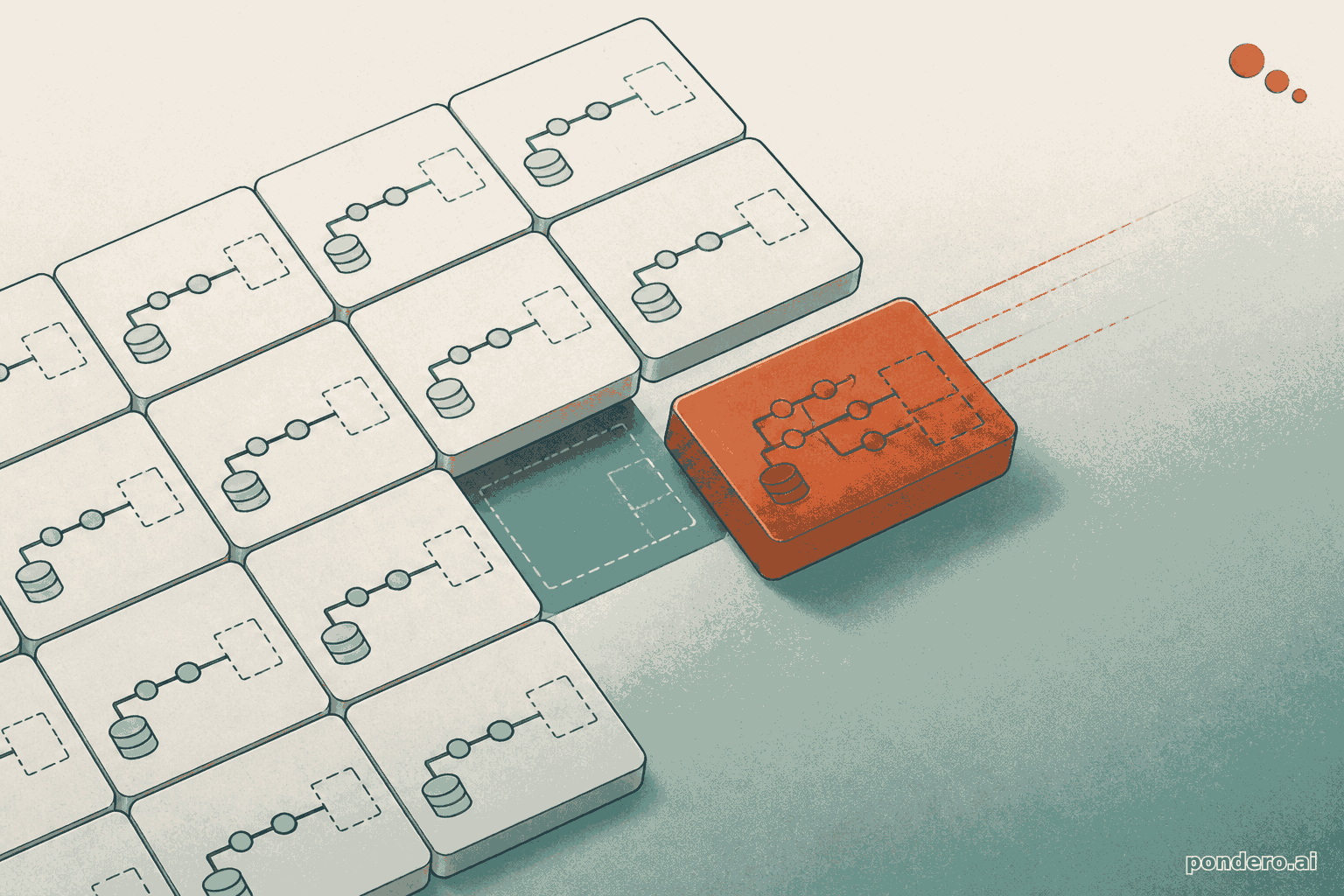
Factories are Warp's cloud software factory infrastructure product. Per Warp's launch post, a factory moves a work item through up to six stages: triage, spec, implementation, code review, verification, and monitoring. Each stage runs a dedicated agent configured independently to use its own model and coding harness.
The model-agnostic stance is deliberate. Warp's default multi-model harness handles open-weight models, but teams can run Claude Code or Codex directly at any stage. A Factory MCP lets engineers route work into or pull work out of the factory from any local coding agent, including Cursor. Per Warp CEO Zach Lloyd, the goal is to let teams benchmark different model configurations against their own workflows rather than committing to a single vendor.
Work enters the factory through whichever tool already hosts the work: Slack, Teams, Linear, Jira, GitHub, GitLab, a local terminal, or a schedule. A foreman agent receives the trigger, determines what the work item needs, and routes it to the appropriate pipeline stage. At any point a human can pause the run, step into the process, or pull the in-flight task to a local setup via the Factory MCP.
Observer agents score a sample of completed runs against token cost, code quality, and defect rate. Because factory definitions are code, observer agents can open pull requests that modify the factory's own YAML configuration when they identify a higher-scoring model-harness combination or context strategy. Warp reported it currently automates about 30% of its internal tasks through its own factory deployment, per the company blog.
Qualified organizations joining the closed beta receive $10,000 of factory compute to start.
Warp puts agent pipeline definitions under version control
The version-controlled pipeline definition is the concrete decision this product forces. Most teams building agentic workflows today maintain their orchestration logic in bespoke scripts or application code separate from the repositories those agents operate on. Warp's model ties the pipeline spec to the repo, which changes what auditing, rollback, and agent-driven self-modification look like in practice.
Per-stage model selection also matters for cost. Running lightweight models at triage and reserving Claude Code or Codex for implementation cuts token costs, but per-stage model selection has historically required bespoke orchestration to wire up. Warp surfaces this as a built-in configuration option.
The self-improvement loop warrants scrutiny until third-party teams report on it. Agents modifying the rules by which subsequent agents operate creates a feedback loop that needs human review gates to stay predictable in production.
What to watch next
Two signals will clarify Warp Factories' real-world positioning. The first is pricing after the closed beta period ends: the $10,000 starter credit defers the per-run cost question that determines whether Factories competes on economics with a self-hosted agentic stack. The second is whether Warp publishes the factory definition schema, which would allow teams to evaluate the YAML spec before committing to the infrastructure.
Sources
- Introducing Warp Factories: open, flexible infrastructure for building your software factory: Warp blog, Zach Lloyd, August 18, 2026 (primary)
- Warp's new system is an out-of-the-box software factory for AI development: TechCrunch, August 18, 2026 (secondary)