A better operating system for Claude: Claude Code plugins for product managers and cloud architects
PM Operating System and Architect Operating System are installable Claude Code plugins. Each adds 19 expert skills and a set of reviewer agents, so Claude writes PRDs, roadmaps, ADRs, threat models and AWS or Azure diagrams the way a senior practitioner would, then checks its own work before it answers. $29 per kit, or $49 for both.

Pick your kit

PM Operating System
Turn Claude into a senior product manager. Every PM document comes out in the same reviewable shape, grounded in your product context.
19 skills · 4 reviewer agents
Get PM OS for $29
Architect Operating System
Give Claude a cloud architect's process for AWS and Azure, side by side, and a guard that stops it from deleting your infrastructure.
19 skills · 5 reviewer agents
Get Architect OS for $29Bundle: both kits
For teams where PMs and architects hand work to each other: 38 skills and 9 reviewer agents. Save $9.
38 skills · 9 reviewer agents
Get both for $49How every skill works
Prompt packs give Claude a template. These plugins give it a method. Every skill has the same five parts, so the output is predictable enough to put in front of a stakeholder.
- 1
When to use it
and when another skill fits better.
- 2
What it needs
At most three questions, then it states its assumptions and proceeds.
- 3
The expert process
The steps a senior PM or architect would follow.
- 4
The exact output
A fixed structure with a length budget, no padding.
- 5
A quality bar
A checklist Claude runs against its own draft before replying.
PM Operating System: all 19 skills
Plus reviewer agents: Exec reviewer, Engineering reviewer, Customer advocate, Metrics reviewer.
- PRD
- Problem, evidence, measurable success metrics, non-goals, numbered requirements with acceptance criteria and open questions.
- AI feature spec
- Spec for an LLM feature: task definition, 15-25 example input/output pairs, a quality rubric, an eval plan and launch thresholds.
- Problem framing
- Turns a vague ask into a sharp problem statement with the affected user, evidence, cost and root-cause hypotheses.
- Strategy doc
- Target customer, alternatives, how you differ, why now, the bets and the explicit non-bets.
- Roadmap
- Outcome-based Now / Next / Later roadmap with metrics, evidence levels and explicit not-on-the-roadmap items.
- OKRs
- Outcome key results with metric, baseline, target and owner, plus end-of-quarter scoring.
- Prioritize
- RICE scoring (or ICE when inputs are missing) with every input, the math and the assumptions shown.
- Metrics tree
- North-star metric broken into 3-5 input metrics, with guardrails, definitions and an instrumentation plan.
- Metrics review
- What moved, the evidence for why, signal versus noise, broken instrumentation and the actions it implies.
- Experiment design
- A/B test with a falsifiable hypothesis, one primary metric, guardrails, sample size and a decision rule set before launch.
- Interview guide
- Research goals, a screener and a timed script of past-behavior questions.
- Research synthesis
- Evidence-backed themes with verbatim quotes, counts and a confidence level per finding.
- Competitive teardown
- Sourced positioning, segment, packaging, capability comparison, and where you win and lose.
- Opportunity brainstorm
- Opportunity tree from one outcome to customer problems to solutions, then a weighted shortlist.
- Decision memo
- 2-4 real options including do-nothing, trade-offs, a recommendation and what would change the call.
- Launch plan
- Launch tier, staged rollout with exit criteria, readiness by function, comms, and rollback criteria.
- Stakeholder update
- Weekly or exec update with the summary first, decisions needed, risks with owners and explicit asks.
- User stories
- Sprint-sized stories with Given/When/Then criteria, covering permissions, empty states and failures.
- Spec handoff
- Turns an approved PRD into an engineering-ready spec with traceability, NFRs, edge cases and a readiness verdict.
Architect Operating System: all 19 skills
Plus reviewer agents: AWS Well-Architected reviewer, Azure Well-Architected reviewer, Security architect, FinOps reviewer, Devil's advocate.
- ADR
- Numbered decision record with drivers, real options, consequences, reversibility and a review date.
- Architecture review
- Review against AWS (6 pillars) or Azure (5 pillars) Well-Architected, with severity-ranked findings.
- API design review
- OpenAPI or AsyncAPI review: modelling, versioning, errors, security, pagination and idempotency.
- C4 diagram
- System context, container and component diagrams in Mermaid, with a legend and assumptions.
- Cloud diagram
- AWS and Azure deployment diagrams with official icons: PNG, SVG and editable draw.io.
- Cloud mapping
- Maps each component to AWS and Azure services side by side, with trade-offs and lock-in notes.
- Cost model
- Cost drivers, sourced usage assumptions and low / expected / peak scenarios, ready for the AWS or Azure pricing calculator.
- Data architecture
- Data stores per access pattern, lakehouse versus warehouse, classification, residency and retention.
- Governance guardrails
- AWS SCPs and Config rules, Azure Policy, and policy-as-code checks in CI.
- IaC review
- Terraform, Bicep, ARM, CloudFormation or CDK review: security, tagging, state, drift and blast radius.
- Integration design
- Sync API or async messaging, idempotency, retries, ordering, delivery guarantees and schema evolution.
- Landing zone
- AWS Organizations and Control Tower or Azure management groups: accounts, identity and networking.
- Migration plan
- One of the 7 Rs per workload, dependency waves, cutover and rollback with go/no-go criteria.
- NFRs
- Quality-attribute scenarios with measurable targets, priorities and a verification method.
- Resilience plan
- RTO and RPO per workload, a disaster recovery strategy on AWS or Azure, and the test plan that proves it.
- SLOs and observability
- SLIs and SLOs from user journeys, error budgets, burn-rate alerts, dashboards and tracing.
- Spec to ADR
- Traces requirements to NFRs, decisions and components, and flags gaps in both directions.
- Tech-debt register
- Each item with its cause, the interest it charges, a principal estimate and a pay-down decision.
- Threat model
- STRIDE per data flow and trust boundary, with AWS and Azure mitigations and residual risk owners.
A guard between Claude and production
Architect OS installs a hook that blocks commands which delete or replace cloud infrastructure:terraform destroy, az group delete, aws cloudformation delete-stack, complete-mode Azure deployments and kubectl delete. Claude explains why, and you run the command yourself if you mean it. Commands that would print a secret ask for approval first.
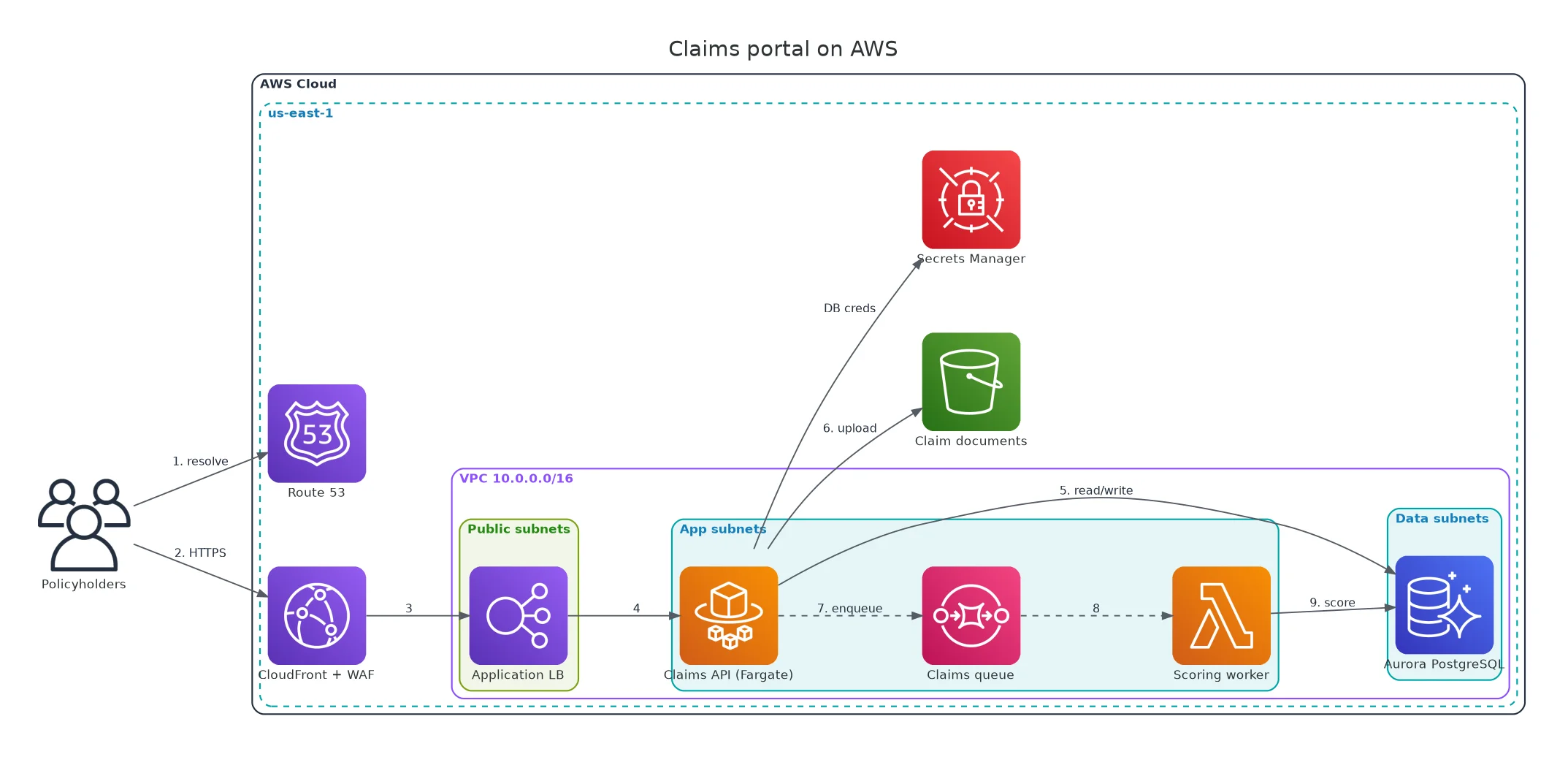
The cloud-diagram skill draws AWS and Azure deployment diagrams with the official service icons, lays them out automatically so every arrow lands on its target, and writes an editable draw.io file next to the PNG and SVG.
Install in five minutes
claude plugin marketplace add ~/pondero-architect-os
claude plugin install architect-os@pondero-architect-os
Unzip into your home folder, run the two commands in a terminal and start a new Claude Code session. On the Claude desktop app, run them in a terminal rather than the app's prompt box; Code sessions on the same computer then pick the plugin up. Each kit ships a quickstart, context templates you fill in once, and an eval suite you can run with claude plugin eval to compare Claude with and without the plugin.
FAQ
What is the PM Operating System for Claude Code?
A Claude Code plugin with 19 product management skills (PRD, roadmap, OKRs, strategy doc, experiment design, research synthesis and more) and 4 reviewer agents. Each skill follows an expert process and checks its own output against a quality bar before it answers.
What is the Architect Operating System for Claude Code?
A Claude Code plugin for solution and cloud architects with 19 skills that cover AWS and Azure side by side (ADRs, architecture reviews, threat models, landing zones, migration plans, cost models and official-icon cloud diagrams), 5 reviewer agents and a cloud guard hook.
What does the cloud guard do?
While the Architect plugin is enabled, Claude cannot run commands that delete or replace cloud infrastructure, such as terraform destroy, az group delete, aws cloudformation delete-stack or kubectl delete. It explains why and you can run the command yourself, or approve such commands one at a time. Commands that print a secret always ask first.
How do I install it?
Unzip the download, move the folder into your home folder, then in a terminal run claude plugin marketplace add with the folder path, followed by claude plugin install. If you use the Claude desktop app, run the commands in a terminal rather than the prompt box. Setup takes about five minutes and the quickstart in the zip walks through it.
Does it work with any codebase or cloud account?
Yes. The skills read an optional context folder you fill in once (your product, users and metrics, or your system, accounts and regions), so outputs use your real situation instead of generic assumptions.
How do I know it actually helps?
Each plugin ships with an eval suite. Run claude plugin eval on it and it compares Claude with and without the plugin on the same tasks, using your own Claude account.
Is it a subscription?
No. It is a one-time purchase: $29 per kit or $49 for both, with free updates within version 1.x.
Make Claude work like your best PM and architect
$29 per kit or $49 for both. One-time, no subscription.
Not ready yet? Get Claude Code tips and AI tool picks in the free daily brief: