
Table of Contents
Beehiiv Summer Release 2026: Group Subscriptions, Pricing, and Whether to Upgrade to Max
Beehiiv now lets a company buy 20 seats of your paid newsletter in one checkout and hand the buyer a dashboard to assign them. That is the centerpiece of the Summer Release Event held July 16, 2026, and it is called Group Subscriptions. It moves one specific kind of newsletter, the kind read by whole teams inside a company, from selling one reader at a time to selling a license.
Here are the two verdicts before anything else. If you sell to companies, this closes most of the gap between Beehiiv and enterprise publishing tools, and the Max plan it requires earns back its cost on your first group deal. If your readers are individuals paying their own cards, Group Subscriptions does nothing for you, and the Max question comes down to dashboards and automations, not this feature.
How group subscriptions works
Every paid subscription on Beehiiv used to happen one reader at a time. The new flow adds a second path. You toggle Group Subscriptions on for any paid plan or tier, and a group purchase option appears at checkout, per the Beehiiv product announcement (June 25, 2026). A corporate buyer picks a seat count, pays once, and becomes the account admin.
That admin lands in a dedicated dashboard and runs the whole thing from there. Per the same announcement, they can invite members one by one or bulk-add an entire team by CSV upload, track seat usage against seats remaining, add or remove people as the team changes, and manage billing and renewals in one place. A separate revenue dashboard tracks group revenue, seat utilization, and growth once organizations start buying.
The CSV upload is the part that makes a 40-person rollout painless. The file is as plain as it sounds:
email,first_name,last_name
[email protected],Alex,Rivera
[email protected],Sam,Chen
[email protected],Jordan,Blake
The admin uploads that, and every address becomes an active seat under the single group invoice. Beehiiv takes no platform fee on the revenue, the same 0% cut it applies to individual paid subscriptions, minus Stripe's standard processing (2.9% plus $0.30 per transaction, per Beehiiv's pricing page, fetched July 16, 2026). One hard requirement: the announcement states Group Subscriptions is available only on the Max plan (and Enterprise above it), which is where the upgrade decision starts.
The Max plan upgrade math
Group Subscriptions lives behind Max, so the real question is whether the jump is worth it for you. Current pricing, pulled today:
| Plan | Price | Group Subscriptions | Who it fits | Source |
|---|---|---|---|---|
| Launch | $0/mo | No | Testing an idea, up to 2,500 subscribers | beehiiv.com/pricing |
| Scale | $43/mo billed annually (about $49 monthly) | No | Solo creators selling to individual readers | beehiiv.com/pricing |
| Max | $96/mo billed annually, $109 monthly | Yes | Newsletters selling access to teams and companies | beehiiv.com/pricing |
| Enterprise | Custom | Yes | High-volume publishers with custom needs | beehiiv.com/pricing |
Pricing per beehiiv.com/pricing, fetched July 16, 2026. Base rates shown; Beehiiv's tiers scale with subscriber count.
The delta that matters is Scale to Max: about $53 more per month on annual billing, $96 against $43 (beehiiv.com/pricing, July 16, 2026). Now put a group deal against it. Say your newsletter sells at $20 per seat per month. One company buying 10 seats brings in $200 a month in new recurring revenue. That single deal covers the entire Max plan cost roughly four times over, and every group deal after it is close to pure margin because Beehiiv keeps none of it.
So the break-even is blunt: if you expect to close even one group deal of three or more seats at typical newsletter pricing, Max pays for itself and the upgrade is a rounding error. Our June pricing breakdown covers the full Scale versus Max comparison feature by feature if you want the rest of what Max adds beyond this.
For a newsletter with zero corporate buyers, ignore all of the above. Your Max case rests on the advanced automations, the deeper analytics, and priority support, not on a B2B feature you will never toggle on. If those do not move you, stay on Scale. You can start a free Beehiiv trial and toggle Group Subscriptions on a Max plan to see the checkout flow before committing to annual billing.
What else shipped in the Summer Release stack
Group Subscriptions is the headline, but it landed alongside a rebuilt monetization layer. Here is what the same release covers, one line of what it does and who it is for.
Subscription Dashboards. Beehiiv rebuilt its entire paid subscription experience around a three-step setup and a set of new dashboards: a Revenue Overview, a Subscription Overview that tracks trials and downgrades, and a Plan Overview that compares subscriptions by billing cadence and tier (product announcement). This is for anyone already running paid subscriptions who has been flying blind on where revenue is actually coming from.
Spotify Open Access. Beehiiv is now an approved Spotify Open Access partner. A subscriber links their Spotify account, upgrades through your newsletter, and premium episodes unlock inside Spotify automatically. This is for creators running a paid podcast who want listeners to stay in the app they already use.
MCP v3 write access. Beehiiv's MCP connection now supports full write access, so an AI client can create and edit posts, build multi-step automations, and launch products, polls, and surveys. This one is for operators who want to draft and publish from Claude, ChatGPT, or Gemini instead of the web editor. We walk through the setup in our Beehiiv MCP write-access guide. The connection follows the standard MCP client pattern, with the endpoint and token from your workspace MCP settings:
{
  "mcpServers": {
    "beehiiv": {
      "url": "<BEEHIIV_MCP_URL>",
      "headers": { "Authorization": "Bearer <YOUR_BEEHIIV_API_KEY>" }
    }
  }
}
None of this arrived in a vacuum. Beehiiv shipped native podcast hosting in April 2026 and webinars a few weeks later, per its product archive. The pattern across 2026 has been one thing: turning a newsletter tool into a full audience-business platform. The company added nearly $4.5 million in ARR in Q1 2026, sent more than 10 billion emails, and passed 50,000 active users, which it called its best quarter yet (GlobeNewswire, June 1, 2026). Beehiiv's event page teased more for the live session; anything announced only on stage and not yet posted to its product pages is not confirmed here, and we will update once the recap is public.
Does this change the Beehiiv vs Kit vs Substack call?
For most creators, no. If you sell to individual readers, the Beehiiv versus Kit decision is still mostly about the shape of your monetization. Beehiiv leans on its Ad Network and Boosts; Kit leans on the Creator Network and deeper product funnels. Group Subscriptions does not touch that call, and our full Beehiiv review still holds for the solo-creator case.
Selling to teams or companies is where the answer flips. Beehiiv now has the clearest native path to seat-based newsletter licensing of the three. Kit's Commerce tools handle digital product sales well, but not group seat management for newsletter access. Substack is built around individual subscriptions and a discovery flywheel, with no equivalent group layer. If your buyers are organizations rather than people, Beehiiv is the pick, and it was not before this release.
There is one more case: the operator who wants to run publishing from an AI client. MCP v3 write access puts Beehiiv ahead of Kit and well ahead of Substack for that workflow. Neither competitor lets an agent draft, edit, and publish through a documented MCP connection today.
Bottom line
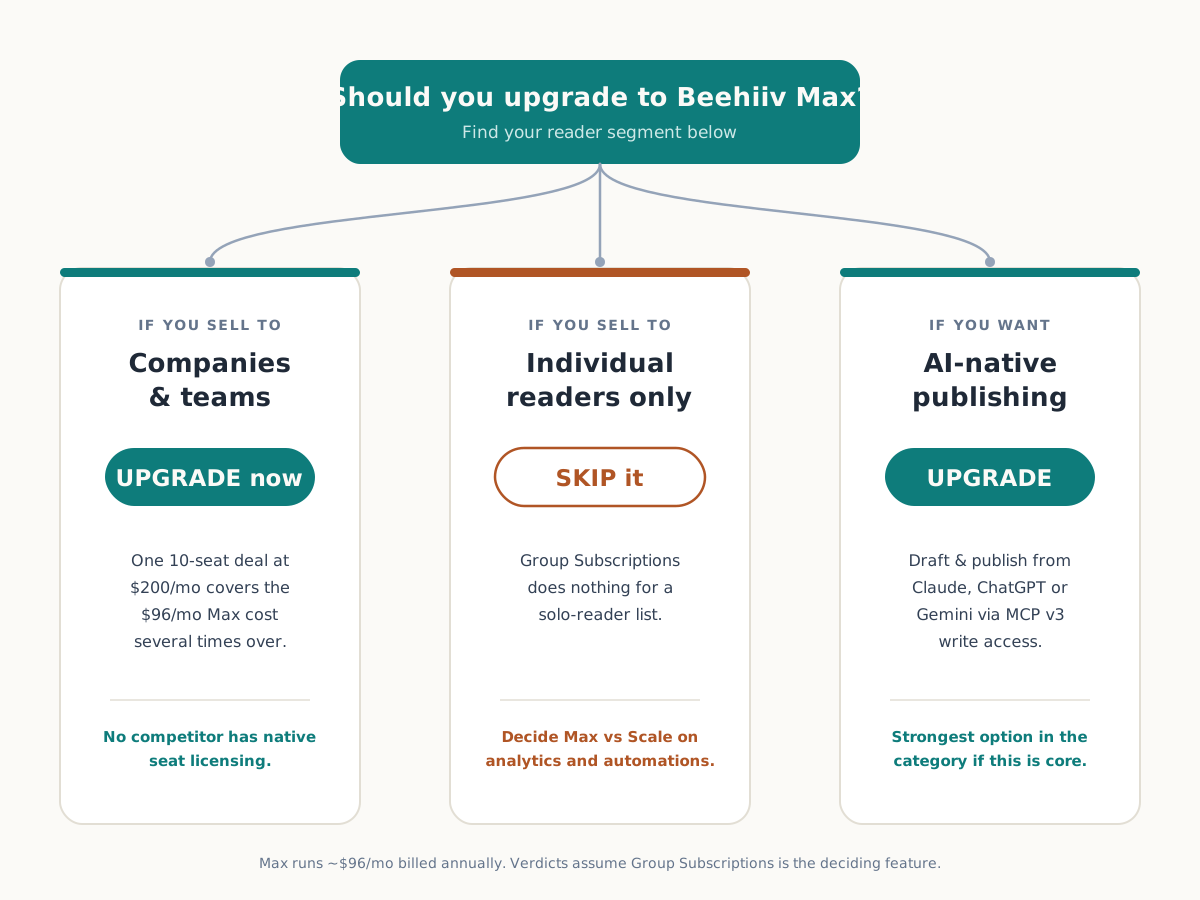
If you sell a paid newsletter to companies, upgrade to Max and turn on Group Subscriptions now. One group deal covers the plan cost several times over, and no competitor offers native seat licensing at this level of integration, so the upgrade is the easy call.
If your audience is individual readers, skip the upgrade on the strength of this feature alone. Group Subscriptions is not for you, and whether Max beats Scale comes down to the automations and analytics, which our June pricing guide breaks down.
For the operator who wants AI-native publishing, Max plus MCP v3 is the strongest option in the category right now, and worth the jump if that workflow is core to how you work. You can start a free Beehiiv trial and try the group checkout and the MCP connection before you lock in an annual plan.