Table of Contents
Lindy for Sales Ops: A 30-Day Rollout Plan (April 2026)
Published May 1, 2026 by Pondero Editorial
The reason most first agentic-automation rollouts fail is not the tool. It is that the team delegates a multi-step loop before it can localize an error inside that loop, so the first bad CRM write destroys trust in the whole system. This 30-day Lindy plan is built around the one discipline that prevents that: an approval gate between every hop, not just at the end. One workflow class per week (inbox triage, meeting scheduling, follow-up drafting, then multi-agent CRM handoff), and by day 30 you have four production Lindys behind gates, a weekly metrics review, and a handoff doc revops can extend.
Lindy is the right tool for this specific job because its three properties line up with the failure mode: natural-language configuration (so a sales ops lead, not an integrations team, owns it), native email and calendar integrations (so week 1 ships without a connector project), and per-action approval gates (so the between-hops discipline is a setting, not custom code). If your rollout did not need gating between hops, you would not need Lindy specifically; several tools would do. The gating is the reason.
The 30-day plan at a glance
| Week | Workflow | Approval gate | Success signal |
|---|---|---|---|
| 1 | Inbox triage Lindy | Auto-reply requires approval | Triage match rate ≥ 85% across 5 days |
| 2 | Meeting scheduling + follow-up drafter | Calendar holds + drafted replies | Time-to-meeting < 24h; ≥ 70% drafts shipped as-is |
| 3 | Multi-Lindy handoff (research, outreach, CRM) | Human sign-off between hops | One end-to-end loop completes per day |
| 4 | Measurement + handoff doc | n/a | Time-saved figure + revops handoff doc shipped |
Week 1: Inbox triage Lindy
Connect the email account. Write the role prompt in plain language: "You triage inbound prospect email. Sort into Hot, Warm, Cold, Disqualified. Draft a reply for Hot and Warm. Never send without approval." Gate every draft through the approval queue.
Run for five days, then tune. Watch triage match rate. Does Lindy's category agree with yours on a back-test of last week's inbox? Below 85%, refine the prompt with two or three counter-examples.
Try Lindy. The free tier covers Week 1 end-to-end.
Week 2: Meeting scheduling + follow-up drafter
Layer the calendar. The scheduling Lindy holds tentative slots, sends a confirmation request, and only books once the human approves. The follow-up drafter chains behind it: 24 hours after a held meeting that didn't book, draft a nudge.
Watch two failure modes: scheduling conflicts (tighten which calendars Lindy reads) and tone drift (add example replies). Keep both gated. Week 2 is calibration, not delegation.
Week 3: Multi-Lindy handoff
The platform earns its keep this week. Build three Lindys that hand off: a research Lindy that enriches an inbound contact, an outreach drafter that writes the reply using that profile, and a CRM-update agent that writes activity back to HubSpot or Salesforce.
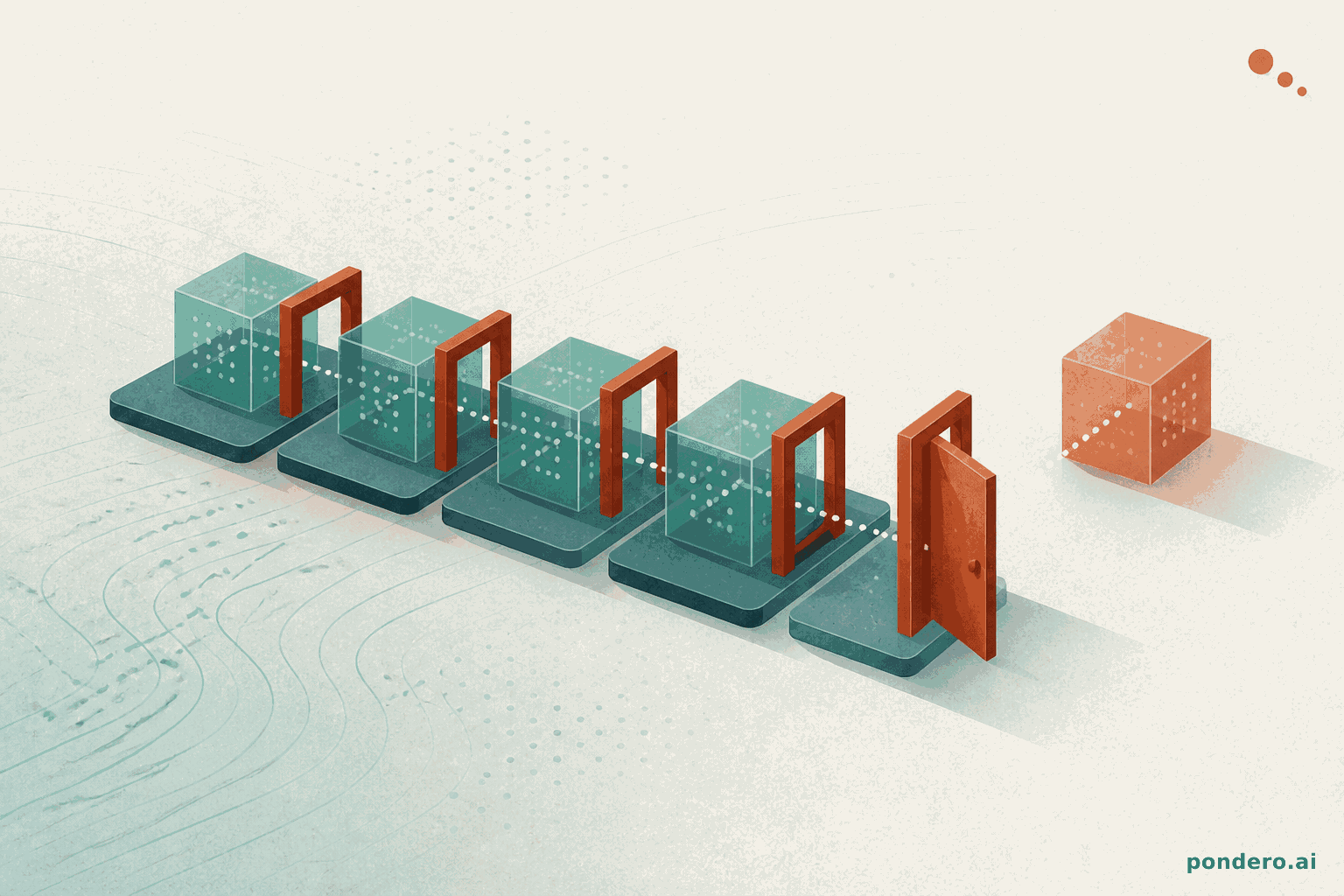
Lock approval gates between hops, not just at the end. Research output gets reviewed before outreach drafts; the draft gets reviewed before the CRM update fires. Slower than one mega-prompt, but the only way to localize errors.
For a wider survey, see our best AI automation tools for ops leads guide.
Week 4: Measurement and handoff doc
Two deliverables close the rollout. First, a time-saved figure: minutes per workflow before vs. after, summed across the week. The candid number usually lands below the demo promise but well above zero. Second, a one-page handoff doc covering Lindy roles, prompts, gate settings, and failure modes from weeks 1 to 3.
Be candid about hidden costs: usage credits compound on multi-agent loops, and approval-gate overhead is real human time. Our hidden costs of automation tools breakdown is worth a read before expanding.
When this plan is the wrong plan
Lindy fits sales ops teams who want agentic automation without becoming an integration-platform team, and the gated rollout above is deliberately conservative because trust is the scarce resource in month one. The recommendation flips in two cases. If your team already runs a platform group maintaining custom integrations, Lindy's natural-language abstraction is overhead you do not need and a code-first tool will scale further. And if your workflows are single-step and high-volume rather than multi-step and judgment-heavy, the between-hops gating that justifies Lindy here does not apply, and a cheaper deterministic automation wins. This plan is for the team in between: real multi-step work, no platform group, low tolerance for a bad CRM write.
Verdict
Run the plan if you are that in-between team. By day 30 you have four production Lindys, a measurement framework, and a handoff doc, which is enough to make the Q3 revops expansion case with numbers instead of a demo.
Try Lindy. Start with the Week 1 inbox triage Lindy.
Related: Lindy tool page · Best AI automation tools for ops leads · Hidden costs of automation tools