Anthropic Redesigns Claude Code Projects to Coordinate Parallel Cloud Sessions from a Single Conversation
Set a goal like "reduce checkout p75 latency" and the new Claude Code Projects opens parallel cloud sessions to profile each endpoint, run optimizations, and file pull requests across your repositories. Anthropic shipped this redesign on September 17, 2026, to a subset of Pro and Max subscribers, converting a previously static reference-file folder into a multi-agent coordinator that handles decomposition, delegation, and assembly without the developer switching between sessions.
What changed
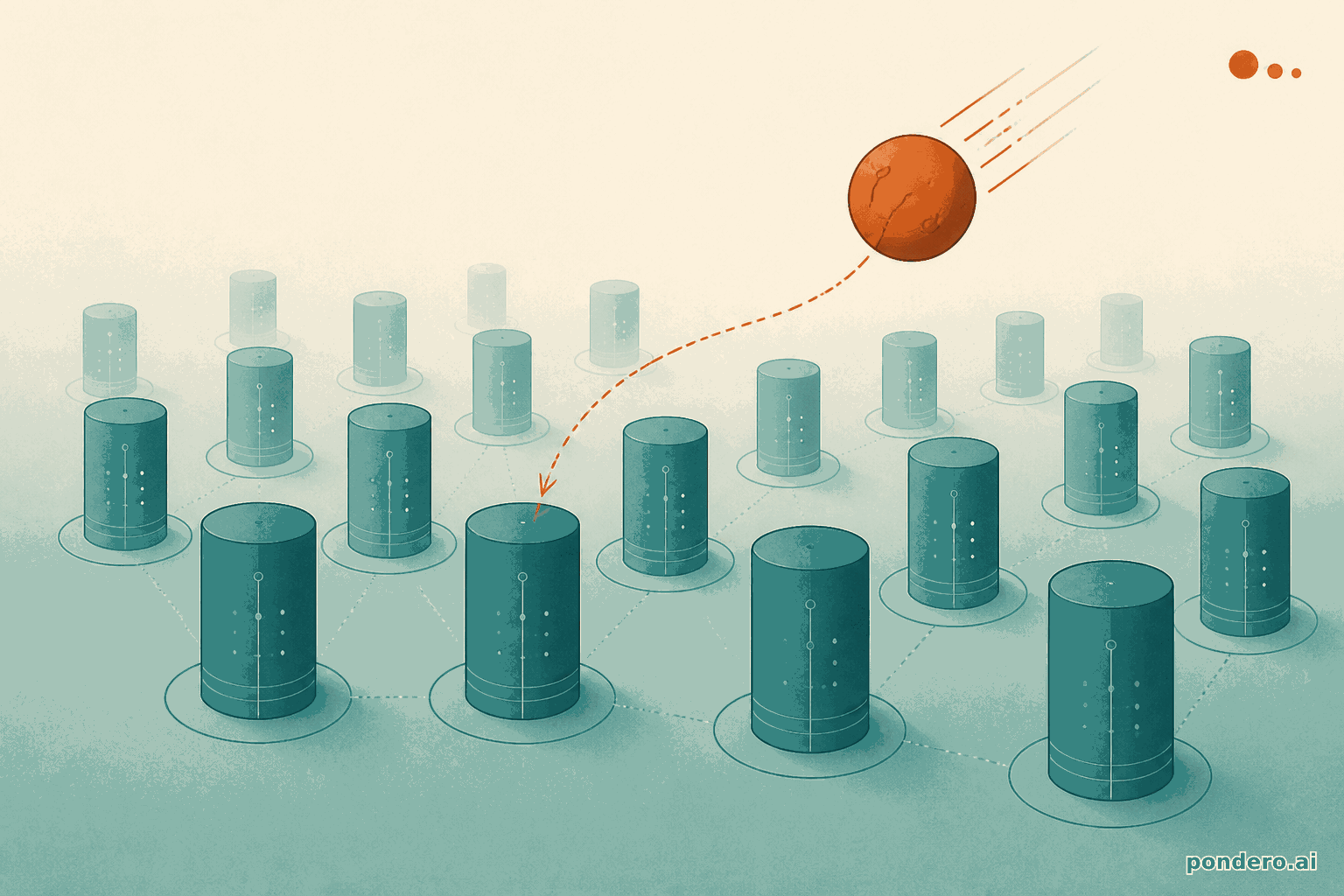
The redesign splits Claude Code Projects into two layers: a coordinator and a set of worker threads, per Anthropic's announcement. The coordinator accepts a high-level engineering goal and delegates work to threads. Each thread runs as a full Claude Code cloud session on its own branch and its own copy of the target repository. Threads run in isolation and can further break their own tasks into subagents, loops, and internal workflows when the assignment is large.
Anthropic described two illustrative examples. In the first, a developer sets a goal to reduce checkout p75 latency; the coordinator fans out to profile each endpoint, test optimizations, and open pull requests in parallel. In the second, a developer connects three repositories (API, web frontend, mobile app) and asks the coordinator to retire a deprecated v1 endpoint; Claude creates one thread per repo to migrate callers, run tests, and open PRs, then specifies which PRs need to merge first. Conflicts when threads modify the same code are resolved as standard git merge conflicts, per the announcement.
A shared memory layer collects decisions and context across all threads over the lifetime of a project. Claude uses shared memory to carry forward information that would otherwise be lost between sessions: a moved release date, a dropped export, or which team to consult before touching a billing service. A separate library organizes files added to the project alongside artifacts that Claude generates, such as design diagrams and implementation plans.
Developers can monitor progress in the main project chat and dive into individual thread streams when they need detail. The interface supports mobile, so a cloud-based workstream can continue while the developer is away from a desktop.
Usage controls are part of the rollout. Because each thread is a full cloud session, projects consume usage limits faster than single-session work. Anthropic added per-project usage tracking and settings to select the model and effort level separately for the coordinator chat and for worker threads, per the announcement. The practical effect: a team can assign a higher-capability model to the coordinator and a lighter model to workers doing routine test runs or single-feature refactors.
Why it matters
Before this redesign, running multiple concurrent Claude Code sessions on a project required the developer to divide the work, manage separate sessions, and reconcile outputs by hand. The new coordinator layer takes on that orchestration. For teams evaluating whether Claude Code can handle long-running or multi-repository engineering tasks, this is the first time that workflow is supported inside a single conversation.
The current beta excludes developers who run local-only workflows. Code sent to cloud threads passes through Anthropic's infrastructure, which is a blocker for teams with security policies against routing proprietary code to external services. Local execution is described as "coming very soon" in Anthropic's announcement but has no specific date. Teams in that position need to wait before evaluating the feature.
Developers who qualify (Pro or Max plan, cloud sessions enabled, no existing projects on web or desktop) can join the waitlist at claude.com/form/projects. Existing Pro/Max projects continue to work and will be upgraded as the rollout expands. Team and Enterprise access follows after the broader Pro/Max rollout completes.
Context and background
Claude Code launched as a command-line tool around 2024. Anthropic introduced web-based agents in October 2025, and cloud sessions followed as the infrastructure layer for longer-running interactions, per XenoSpectrum. The September 2026 redesign is the point where those pieces combine into a coordinator-and-threads model.
The architecture mirrors the multiagent orchestration primitives Anthropic documented in its Managed Agents API, which supports up to 25 concurrent threads per session and allows each thread its own model, system prompt, and tool configuration, per the Anthropic platform docs. Claude Code Projects exposes this capability through a product-level interface rather than an API.
The positioning places Claude Code against tools like GitHub Copilot and Cursor, both of which have extended from code completion toward multi-step engineering assistance. Coordinator-level orchestration, where one agent decomposes a goal and directs parallel agents, is a different category: the comparison shifts from code quality to workflow integration, per CryptoBriefing.
What to watch next
Three questions will define how broadly the new Projects can be adopted. First, local execution: Anthropic said local-tool support is coming soon, but gave no date. Until it ships, security-conscious enterprise teams cannot evaluate the feature against their policies. Second, shared memory durability: whether the shared memory layer persists across separate Projects or resets between them determines whether teams can accumulate institutional context over months. The announcement does not specify. Third, Team and Enterprise rollout timing: Anthropic set no date for those tiers beyond "after the Pro/Max beta expands."
Sources
- Projects redesigned: from folder to conversation: Anthropic blog, September 17, 2026 (primary)
- Claude Code Overhauls Projects With Parallel Cloud Sessions and Shared Memory: XenoSpectrum, September 18, 2026 (secondary)
- Anthropic launches Claude Code Projects for persistent developer coordination: CryptoBriefing, September 17, 2026 (secondary)
- Multiagent orchestration - Claude Platform Docs: Anthropic Managed Agents documentation (secondary)