OpenAI's first consumer hardware is a $300-$400 donut-shaped AI speaker with a camera, designed with Jony Ive's LoveFrom for 2027
OpenAI's forthcoming AI hardware turns out to be something Amazon and Google have not shipped: a camera-equipped home speaker that feeds live visual context into ChatGPT in real time, priced between $300 and $400 and designed by Jony Ive's LoveFrom studio for a 2027 launch. Bloomberg, TechCrunch, and Fast Company all reported on these details on August 6-7, 2026. OpenAI has not confirmed the device, its features, or its pricing.
What
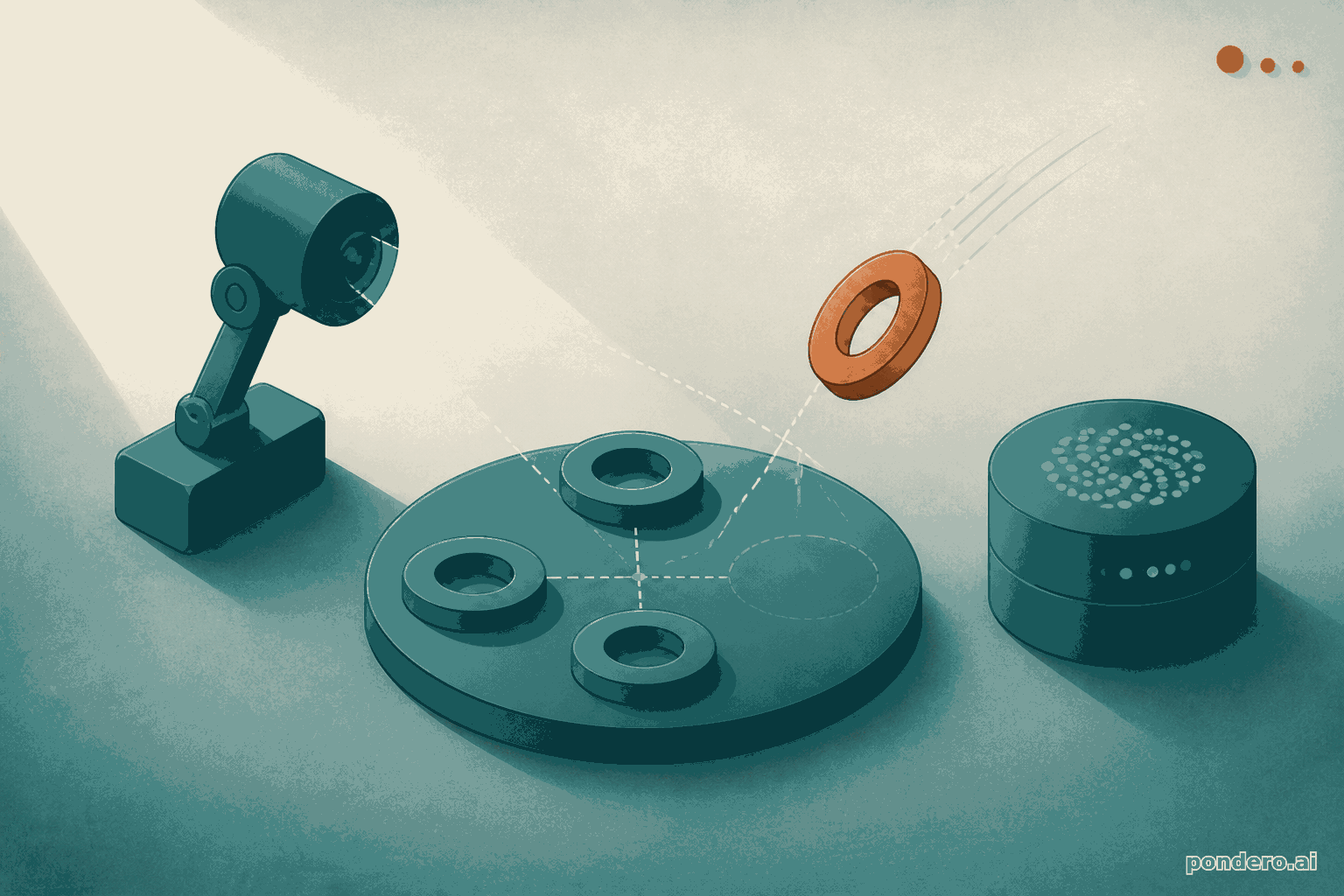
The device is roughly the size of a hockey puck, battery-powered for room-to-room portability, and built from high-quality metal with speaker grills, microphones, lights, and a camera, per Bloomberg's reporting. That camera feeds live visual information about the user's environment into ChatGPT, extending the model's situational awareness beyond voice queries alone. The donut shape led TechCrunch and others to describe it as the intended "physical manifestation of ChatGPT," per TechCrunch.
Amazon's Echo lineup currently runs from $40 to $240. At $300-$400, OpenAI's device lands at a substantial premium above the top of that range. The speaker is also intended to control smart home devices and play music alongside its AI conversational functions.
LoveFrom, the studio Jony Ive founded after leaving Apple in 2019, is the design partner. OpenAI announced a broader collaboration with LoveFrom in 2024 covering a family of AI hardware products. This week's reporting is the first to specify the form factor and price range for the debut device. A 2027 launch date appears across all three reports. Additional OpenAI hardware products are planned beyond this speaker.
A camera puts it in a different category from smart speakers
The camera is what separates this from an incremental Echo update. Feeding live visual context into an AI model changes what a home assistant can plausibly do: read labels, describe physical surroundings, respond to the state of a room. For AI-tool operators who run ChatGPT heavily in their workflows, a camera-equipped home node that stays contextually aware is a different product category than any existing smart speaker.
The price point defines who OpenAI is targeting first. At $300-$400, this is not a mass consumer device competing for Prime Day impulse buys. Smart speakers historically have not been a reliable profit center for anyone, as TechCrunch noted. OpenAI appears to be targeting early adopters willing to pay a premium for a ChatGPT-native physical device, rather than trying to displace the Echo install base on volume.
The broader signal is that OpenAI now intends to own the home AI hardware layer, not just the model powering it. That ambition puts it on a direct collision course with Amazon and Google in their strongest distribution channels, where both companies have years of installed-base and ecosystem lock-in advantage.
What to watch next
OpenAI has given no official timeline for a product announcement or pre-order. A camera-equipped home device will face significant privacy scrutiny before and after launch. An ongoing trade-secret lawsuit filed by Apple against OpenAI, which OpenAI has denied, adds legal complexity to the Jony Ive connection. Watch for whether Amazon or Google respond with camera-enabled updates to their own smart speaker lines in the months ahead.
Sources
- What Is OpenAI's Device? A Doughnut-Shaped Speaker That Costs Over $300: Bloomberg, August 6, 2026
- OpenAI's new AI smart speaker will reportedly sell for between $300 and $400: TechCrunch, August 6, 2026
- OpenAI's first piece of hardware might be a $300 donut-shaped smart speaker: Fast Company, August 6, 2026